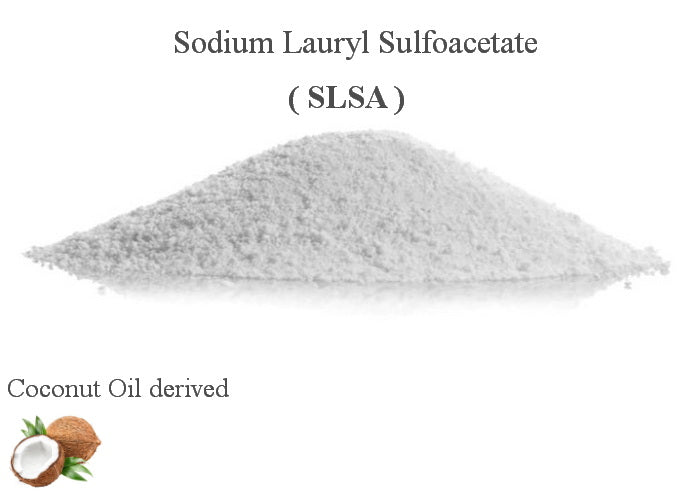
Sodium Lauryl Sulfoacetate (SLSA)
Sodium Lauryl Sulfoacetate (SLSA)
Sodium Lauryl Sulfoacetate (SLSA) (Foaming Surfactant Powder for Bubble Baths and Bath Bombs)
Our Sodium Lauryl Sulfoacetate (SLSA) is a mild, foaming anionic surfactant supplied as a powder. It is made from palm and coconut oils and is used in powdered bubble baths, bath bombs, shampoos, cleansing creams and soaks.
It builds a rich lather and adds viscosity, and it is stable in hard water. Many makers choose it as an alternative to soap or harsher sulphates when they want a gentler foaming ingredient.
|
Foaming powder Rich, creamy lather |
Bubble baths and bath bombs Dry blends |
Stable in hard water Gentle cleansing blends |
100 g to 1 kg Four pack sizes |
Safety information: for external (cosmetic) use only. Keep out of reach of children. Dust can irritate the nose, throat and eyes, so wear a dust mask and eye protection. See Safety below and the Safety Data Sheet in the Product Documents section at the end of this page.
Specifications
| Specification | Detail |
|---|---|
| Product | Sodium Lauryl Sulfoacetate (SLSA) |
| INCI | Sodium Lauryl Sulfoacetate |
| Type | Anionic surfactant powder (a sulfoacetate) |
| Appearance | White to off-white powder |
| Source | Made from palm and coconut oils |
| Solubility | Water soluble. Add to the water phase with gentle stirring |
| Typical use rate | About 0.5-3% in skin care and cleansing creams, and about 2-10% in body washes, soaks and shampoos. Test your own recipe |
| Suitable for | Powdered bubble baths, bath bombs, bath soaks, shampoos, body washes, cleansing creams, facial cleansers |
| Pack Sizes | 100 g, 200 g, 500 g, 1 kg |
| Storage | Sealed, cool and dry, away from moisture. The powder clumps if damp |
| Use | Raw material for makers. Formulation, preservation, safety assessment and labelling of finished products are the maker's responsibility. Not for internal use |
Uses
| Use | How it is used |
|---|---|
| Powdered bubble bath | Blend with salts, citric acid and baking soda for a foaming bath powder |
| Bath bombs and bath fizzies | Adds foam to the bath. Mix into the dry ingredients and test |
| Shampoos and body washes | Dissolve in the water phase and combine with other surfactants |
| Cleansing creams | Used at low rates. Test the feel on skin |
| Bath soaks | Mix into soaking salts for a foaming soak |
| Shampoo bars and solid cleansers | A foaming ingredient for solid cleansers. Test in your own recipe |
How to Make a Simple Bubble Bath Powder
- Weigh. Wear a dust mask. Weigh the SLSA and your other dry ingredients, such as Epsom salts, baking soda and citric acid.
- Mix. Stir the dry ingredients together thoroughly in a clean, dry bowl, breaking up any lumps.
- Add scent and colour. Add a little fragrance or essential oil if you wish. Stir well so it spreads evenly, or pre-mix with a solubiliser such as Polysorbate 80.
- Package. Pour into a dry, airtight jar straight away. SLSA clumps if it picks up moisture.
- Use. Add a few tablespoons under running water in the bath. Test the amount for the foam you like.
Tip: Wear a dust mask when scooping or pouring, and keep the container sealed so the powder stays dry.
Using It in Bath, Hair & Skin Products ▼
These are common maker starting points, not fixed rules. Results vary with your recipe, so always test a small batch first.
| Use | Starting amount | Notes |
|---|---|---|
| Bubble bath powder | Test about 5-15% of the dry mix | Combine with salts, bicarbonate and citric acid. Test the foam. |
| Bath bombs | Test small batches | Mix into the dry ingredients. Too much can make the bomb crumble. |
| Shampoo or body wash | About 2-10% | Add to the water phase with gentle stirring and combine with other surfactants. |
| Cleansing creams and facial cleansers | About 0.5-3% | Use lower rates for gentler products. |
| Shampoo bars | As set by your recipe | Test the lather and bar hardness. |
Tips & Troubleshooting ▼
| Problem | Likely cause | What to try |
|---|---|---|
| Powder clumps | Moisture | Keep it sealed and dry. Break clumps with a spoon, and store with a food-safe desiccant. |
| Dust everywhere | Fine powder | Wear a dust mask and pour gently, ideally over a tray. |
| Bath bomb crumbles | Too much powder | Reduce the SLSA in the next batch. |
| Low foam in hard or oily water | Rate too low | Increase the rate a little or combine with another surfactant. |
| Skin feels dry | Rate too high | Lower the rate and add a moisturising ingredient. |
| Wash separates | Incompatible additives | Do not mix with cationic ingredients such as BTMS-50. Test small amounts. |
Safety & Selling Your Products ▼
This product is a cosmetic raw material for external use only. Do not swallow it, keep it out of reach of children and keep it away from the eyes. Fine powders can irritate the airways, so wear a dust mask when weighing or pouring and avoid creating dust clouds. Patch test finished products before first use and stop using a product if irritation occurs.
SLSA dust is irritating to the eyes and airways. Wear a dust mask and eye protection when handling it, and rinse well with water if it gets in your eyes. Do not mix it with cationic ingredients such as BTMS-50.
Selling what you make? This is a raw material for makers. The formulation, preservation, safety assessment, labelling and any regulatory requirements for your finished cosmetics or soap (including the NZ cosmetic rules) are your responsibility, and health or treatment claims should not be made for your products. Contact us at info@purefx.co.nz if you need product information.
Frequently Asked Questions ▼
Is SLSA the same as SLS?
No. SLSA (sodium lauryl sulfoacetate) is a different surfactant. Many makers use it as a gentler alternative to SLS.
What is it made from?
It is made from palm and coconut oils.
How much do I use?
About 0.5-3% in skin care and about 2-10% in washes, shampoos and soaks. For dry bath blends, test small batches.
How do I use it in bath bombs?
Mix it into the dry ingredients and test the amount and the foam. Too much can make the bomb crumble.
Does it work in hard water?
Yes, it is stable in hard water.
Do I need to wear a mask?
Yes. The dust can irritate the nose, throat and eyes.
Do I need a preservative?
For water-based products yes. Dry blends that stay dry do not.
How should I store it?
Sealed, in a cool, dry place away from moisture.
Is it for internal use?
No. It is sold for external cosmetic use only.
Sizes & Price
| Pack | Price | Price per 100 g |
|---|---|---|
| 100 g | $17.00 | $17.00 |
| 200 g | $26.00 | $13.00 |
| 500 g | $52.00 | $10.40 |
| 1 kg | $98.00 | $9.80 |
Pairs Well With
Pair with Epsom salts, baking soda and citric acid, and add Polysorbate 80 or lavender essential oil. For washes, use with cocamidopropyl betaine, Coco Glucoside or PEG-40 hydrogenated castor oil. Browse our bath bomb ingredients and shampoo and conditioner bases. Finish with fragrance oils or essential oils. Browse emulsifiers and thickeners. |
 Product Documents
|
Couldn't load pickup availability
Sodium Lauryl Sulfoacetate (SLSA) (Foaming Surfactant Powder for Bubble Baths and Bath Bombs)
Our Sodium Lauryl Sulfoacetate (SLSA) is a mild, foaming anionic surfactant supplied as a powder. It is made from palm and coconut oils and is used in powdered bubble baths, bath bombs, shampoos, cleansing creams and soaks.
It builds a rich lather and adds viscosity, and it is stable in hard water. Many makers choose it as an alternative to soap or harsher sulphates when they want a gentler foaming ingredient.
|
Foaming powder Rich, creamy lather |
Bubble baths and bath bombs Dry blends |
Stable in hard water Gentle cleansing blends |
100 g to 1 kg Four pack sizes |
Safety information: for external (cosmetic) use only. Keep out of reach of children. Dust can irritate the nose, throat and eyes, so wear a dust mask and eye protection. See Safety below and the Safety Data Sheet in the Product Documents section at the end of this page.
Specifications
| Specification | Detail |
|---|---|
| Product | Sodium Lauryl Sulfoacetate (SLSA) |
| INCI | Sodium Lauryl Sulfoacetate |
| Type | Anionic surfactant powder (a sulfoacetate) |
| Appearance | White to off-white powder |
| Source | Made from palm and coconut oils |
| Solubility | Water soluble. Add to the water phase with gentle stirring |
| Typical use rate | About 0.5-3% in skin care and cleansing creams, and about 2-10% in body washes, soaks and shampoos. Test your own recipe |
| Suitable for | Powdered bubble baths, bath bombs, bath soaks, shampoos, body washes, cleansing creams, facial cleansers |
| Pack Sizes | 100 g, 200 g, 500 g, 1 kg |
| Storage | Sealed, cool and dry, away from moisture. The powder clumps if damp |
| Use | Raw material for makers. Formulation, preservation, safety assessment and labelling of finished products are the maker's responsibility. Not for internal use |
Uses
| Use | How it is used |
|---|---|
| Powdered bubble bath | Blend with salts, citric acid and baking soda for a foaming bath powder |
| Bath bombs and bath fizzies | Adds foam to the bath. Mix into the dry ingredients and test |
| Shampoos and body washes | Dissolve in the water phase and combine with other surfactants |
| Cleansing creams | Used at low rates. Test the feel on skin |
| Bath soaks | Mix into soaking salts for a foaming soak |
| Shampoo bars and solid cleansers | A foaming ingredient for solid cleansers. Test in your own recipe |
How to Make a Simple Bubble Bath Powder
- Weigh. Wear a dust mask. Weigh the SLSA and your other dry ingredients, such as Epsom salts, baking soda and citric acid.
- Mix. Stir the dry ingredients together thoroughly in a clean, dry bowl, breaking up any lumps.
- Add scent and colour. Add a little fragrance or essential oil if you wish. Stir well so it spreads evenly, or pre-mix with a solubiliser such as Polysorbate 80.
- Package. Pour into a dry, airtight jar straight away. SLSA clumps if it picks up moisture.
- Use. Add a few tablespoons under running water in the bath. Test the amount for the foam you like.
Tip: Wear a dust mask when scooping or pouring, and keep the container sealed so the powder stays dry.
Using It in Bath, Hair & Skin Products ▼
These are common maker starting points, not fixed rules. Results vary with your recipe, so always test a small batch first.
| Use | Starting amount | Notes |
|---|---|---|
| Bubble bath powder | Test about 5-15% of the dry mix | Combine with salts, bicarbonate and citric acid. Test the foam. |
| Bath bombs | Test small batches | Mix into the dry ingredients. Too much can make the bomb crumble. |
| Shampoo or body wash | About 2-10% | Add to the water phase with gentle stirring and combine with other surfactants. |
| Cleansing creams and facial cleansers | About 0.5-3% | Use lower rates for gentler products. |
| Shampoo bars | As set by your recipe | Test the lather and bar hardness. |
Tips & Troubleshooting ▼
| Problem | Likely cause | What to try |
|---|---|---|
| Powder clumps | Moisture | Keep it sealed and dry. Break clumps with a spoon, and store with a food-safe desiccant. |
| Dust everywhere | Fine powder | Wear a dust mask and pour gently, ideally over a tray. |
| Bath bomb crumbles | Too much powder | Reduce the SLSA in the next batch. |
| Low foam in hard or oily water | Rate too low | Increase the rate a little or combine with another surfactant. |
| Skin feels dry | Rate too high | Lower the rate and add a moisturising ingredient. |
| Wash separates | Incompatible additives | Do not mix with cationic ingredients such as BTMS-50. Test small amounts. |
Safety & Selling Your Products ▼
This product is a cosmetic raw material for external use only. Do not swallow it, keep it out of reach of children and keep it away from the eyes. Fine powders can irritate the airways, so wear a dust mask when weighing or pouring and avoid creating dust clouds. Patch test finished products before first use and stop using a product if irritation occurs.
SLSA dust is irritating to the eyes and airways. Wear a dust mask and eye protection when handling it, and rinse well with water if it gets in your eyes. Do not mix it with cationic ingredients such as BTMS-50.
Selling what you make? This is a raw material for makers. The formulation, preservation, safety assessment, labelling and any regulatory requirements for your finished cosmetics or soap (including the NZ cosmetic rules) are your responsibility, and health or treatment claims should not be made for your products. Contact us at info@purefx.co.nz if you need product information.
Frequently Asked Questions ▼
Is SLSA the same as SLS?
No. SLSA (sodium lauryl sulfoacetate) is a different surfactant. Many makers use it as a gentler alternative to SLS.
What is it made from?
It is made from palm and coconut oils.
How much do I use?
About 0.5-3% in skin care and about 2-10% in washes, shampoos and soaks. For dry bath blends, test small batches.
How do I use it in bath bombs?
Mix it into the dry ingredients and test the amount and the foam. Too much can make the bomb crumble.
Does it work in hard water?
Yes, it is stable in hard water.
Do I need to wear a mask?
Yes. The dust can irritate the nose, throat and eyes.
Do I need a preservative?
For water-based products yes. Dry blends that stay dry do not.
How should I store it?
Sealed, in a cool, dry place away from moisture.
Is it for internal use?
No. It is sold for external cosmetic use only.
Sizes & Price
| Pack | Price | Price per 100 g |
|---|---|---|
| 100 g | $17.00 | $17.00 |
| 200 g | $26.00 | $13.00 |
| 500 g | $52.00 | $10.40 |
| 1 kg | $98.00 | $9.80 |
Pairs Well With
Pair with Epsom salts, baking soda and citric acid, and add Polysorbate 80 or lavender essential oil. For washes, use with cocamidopropyl betaine, Coco Glucoside or PEG-40 hydrogenated castor oil. Browse our bath bomb ingredients and shampoo and conditioner bases. Finish with fragrance oils or essential oils. Browse emulsifiers and thickeners. |
|
Product Documents
|