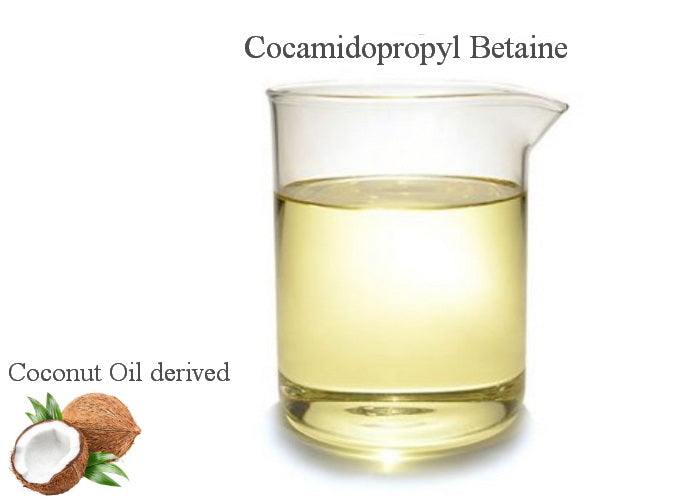
Cocamidopropyl Betaine (Palm Free)
Cocamidopropyl Betaine (Palm Free)
Cocamidopropyl Betaine (Palm Free) (Mild Amphoteric Surfactant for Shampoos and Washes)
Our Cocamidopropyl Betaine is a mild amphoteric surfactant made from coconut, and ours is palm free. It is a widely used foam booster and co-surfactant in shampoos, body washes, liquid hand soaps, bubble baths and cleansing creams.
It works with anionic, non-ionic and cationic surfactants, helps build thickness with a little salt, and gives a good, creamy foam. It is a popular choice for gentler cleansing formulas, including those for sensitive skin.
|
Coconut-derived, palm free Amphoteric surfactant |
Foam booster Shampoos and washes |
Thickens with salt Co-surfactant |
200 ml to 4 L Five pack sizes |
Safety information: for external (cosmetic) use only. Keep out of reach of children, keep away from the eyes and rinse thoroughly. A small number of people react to it, so patch test finished products. See Safety below and the Safety Data Sheet in the Product Documents section at the end of this page.
Specifications
| Specification | Detail |
|---|---|
| Product | Cocamidopropyl Betaine (Palm Free) |
| INCI | Cocamidopropyl Betaine |
| Type | Amphoteric (mild) surfactant, coconut-derived, palm free |
| Appearance | Clear to pale yellow liquid |
| Typical active content | About 30-35% in water (typical for this type of product) |
| Solubility | Water soluble |
| Typical use rate | About 3-15% depending on the product. Test your own recipe |
| Compatibility | Compatible with anionic, non-ionic and cationic surfactants |
| Suitable for | Shampoos, body washes, hand soaps, bubble baths, cleansing creams, pet shampoos |
| Pack Sizes | 200 ml, 500 ml, 1 L, 2 L, 4 L |
| Storage | Sealed, cool and dry, away from heat and sunlight |
| Use | Raw material for makers. Formulation, preservation, safety assessment and labelling of finished products are the maker's responsibility. Not for internal use |
Uses
| Use | How it is used |
|---|---|
| Shampoos and body washes | A co-surfactant that boosts foam and mildness. About 3-15% |
| Liquid hand soap | Combine with another surfactant and thicken with a little salt |
| Bubble baths | Adds foam and a creamy lather. Test the foam level |
| Cleansing creams and facial cleansers | Use at lower rates in gentle formulas |
| Pet shampoos | Used in mild pet shampoo formulas. Test your own recipe |
| Thickening wash bases | Helps raise viscosity when used with a little salt or a thickener |
How to Make a Simple Body Wash
- Weigh. Weigh the water into a clean mixing container, then add the cocamidopropyl betaine and the other surfactants one at a time.
- Mix gently. Stir slowly with a spoon or low-speed mixer so you do not whip in foam. Do not heat unless your recipe needs it.
- Add the extras. Stir in vegetable glycerine, extracts and fragrance (pre-mixed with a solubiliser such as PEG-40 hydrogenated castor oil or Polysorbate 20 if needed).
- Adjust the pH. Check the pH with test strips or a meter. Most gentle washes work best slightly acidic, and a little citric acid adjusts it. Add it a drop at a time.
- Thicken. Stir in a pinch of salt or a little xanthan gum to thicken, a little at a time, until you reach the thickness you want.
- Preserve and test. Add a suitable preservatives, leave to stand so the foam settles, and pour into clean bottles.
Tip: Add salt a pinch at a time and stir well. Too much salt makes a wash thin again.
Starting Formula to Test ▼
This is a simple, gentle body wash starting point, not a tested recipe. Adjust the amounts to taste and always check the pH.
| Ingredient | Amount |
|---|---|
| Water | about 60-65% |
| Cocamidopropyl Betaine | 15% |
| Coco Glucoside | 10-15% |
| vegetable glycerine | 2% |
| Salt | about 0.5-1.5% to thicken |
| Preservative, used at its recommended rate | about 1% |
| Citric acid | a few drops to adjust the pH |
Mix gently, adjust the pH, thicken with salt and let the foam settle before bottling.
Using It in Washes & Cleansers ▼
These are common maker starting points, not fixed rules. Results vary with your recipe, so always test a small batch first.
| Use | Starting amount | Notes |
|---|---|---|
| Shampoo or body wash | About 5-15% | Combine with another surfactant for balance. Thicken with salt or xanthan gum. |
| Liquid hand soap | About 5-12% | Mild and foaming. Test the feel on hands. |
| Bubble bath | About 5-15% | Increases foam. Combine with a main foaming surfactant. |
| Cleansing cream | About 3-8% | Use lower rates in gentle products. |
| Pet shampoo | About 5-10% | Keep out of the eyes. Test your own recipe. |
Tips & Troubleshooting ▼
| Problem | Likely cause | What to try |
|---|---|---|
| Wash is too thin | Not enough thickener or surfactant | Add a pinch of salt, or a little xanthan gum. Stir and wait a few minutes. |
| Wash goes thin after adding salt | Too much salt | Dilute with a little water and surfactant, or start over with less salt. |
| Too much foam | Whipped in air | Stir gently and leave to stand so the foam can settle. |
| Cloudy or separated | Incompatible ingredients or cold storage | Test small amounts and check compatibility. Warm gently and stir. |
| Skin feels tight or irritated | Rate too high, or pH off | Lower the rate, check the pH and patch test. |
| Mix spoils | Water-based products can grow mould and bacteria | Use clean tools and add a suitable preservative. |
Safety & Selling Your Products ▼
This product is a cosmetic raw material for external use only. Do not swallow it, keep it out of reach of children and keep it away from the eyes. Wear gloves and eye protection when handling the concentrated product, patch test finished products before first use and stop using a product if irritation occurs.
Concentrated surfactants can irritate or damage the eyes. Wear eye protection and rinse well with water if it splashes. A small number of people are sensitive to cocamidopropyl betaine in finished products, so patch test. Water-based washes need a suitable preservative.
Selling what you make? This is a raw material for makers. The formulation, preservation, safety assessment, labelling and any regulatory requirements for your finished cosmetics or soap (including the NZ cosmetic rules) are your responsibility, and health or treatment claims should not be made for your products. Contact us at info@purefx.co.nz if you need product information.
Frequently Asked Questions ▼
Is it palm free?
Yes. It is derived from coconut and is a palm-free grade.
What does it do?
It boosts foam, adds mildness and helps build thickness, and it blends with other surfactants.
How much do I use?
About 3-15% depending on the product. Always test your own recipe.
Can I use it as the only surfactant?
It is usually used as a co-surfactant alongside a main surfactant for good cleansing.
How do I thicken it?
A little salt, added slowly, or a thickener such as xanthan gum.
Is it vegan?
It is plant-derived. We have not independently verified vegan status, so please ask us before making a vegan claim.
Do I need a preservative?
Yes. Any water-based wash needs a suitable preservative.
How should I store it?
Sealed, in a cool, dry place away from heat and sunlight.
Is it for internal use?
No. It is sold for external cosmetic use only.
Sizes & Price
| Pack | Price | Price per 100 ml |
|---|---|---|
| 200 ml | $9.00 | $4.50 |
| 500 ml | $13.00 | $2.60 |
| 1 L | $21.00 | $2.10 |
| 2 L | $38.00 | $1.90 |
| 4 L | $70.00 | $1.75 |
Pairs Well With
Pair with Coco Glucoside, SLSA or PEG-40 hydrogenated castor oil, and add vegetable glycerine and aloe vera gel. Thicken with xanthan gum, and preserve with Geogard 221 or phenoxyethanol. See our shampoo and conditioner bases and liquid soap bases. Finish with lavender essential oil or tea tree essential oil. Browse emulsifiers and thickeners. |
 Product Documents
|
Couldn't load pickup availability
Cocamidopropyl Betaine (Palm Free) (Mild Amphoteric Surfactant for Shampoos and Washes)
Our Cocamidopropyl Betaine is a mild amphoteric surfactant made from coconut, and ours is palm free. It is a widely used foam booster and co-surfactant in shampoos, body washes, liquid hand soaps, bubble baths and cleansing creams.
It works with anionic, non-ionic and cationic surfactants, helps build thickness with a little salt, and gives a good, creamy foam. It is a popular choice for gentler cleansing formulas, including those for sensitive skin.
|
Coconut-derived, palm free Amphoteric surfactant |
Foam booster Shampoos and washes |
Thickens with salt Co-surfactant |
200 ml to 4 L Five pack sizes |
Safety information: for external (cosmetic) use only. Keep out of reach of children, keep away from the eyes and rinse thoroughly. A small number of people react to it, so patch test finished products. See Safety below and the Safety Data Sheet in the Product Documents section at the end of this page.
Specifications
| Specification | Detail |
|---|---|
| Product | Cocamidopropyl Betaine (Palm Free) |
| INCI | Cocamidopropyl Betaine |
| Type | Amphoteric (mild) surfactant, coconut-derived, palm free |
| Appearance | Clear to pale yellow liquid |
| Typical active content | About 30-35% in water (typical for this type of product) |
| Solubility | Water soluble |
| Typical use rate | About 3-15% depending on the product. Test your own recipe |
| Compatibility | Compatible with anionic, non-ionic and cationic surfactants |
| Suitable for | Shampoos, body washes, hand soaps, bubble baths, cleansing creams, pet shampoos |
| Pack Sizes | 200 ml, 500 ml, 1 L, 2 L, 4 L |
| Storage | Sealed, cool and dry, away from heat and sunlight |
| Use | Raw material for makers. Formulation, preservation, safety assessment and labelling of finished products are the maker's responsibility. Not for internal use |
Uses
| Use | How it is used |
|---|---|
| Shampoos and body washes | A co-surfactant that boosts foam and mildness. About 3-15% |
| Liquid hand soap | Combine with another surfactant and thicken with a little salt |
| Bubble baths | Adds foam and a creamy lather. Test the foam level |
| Cleansing creams and facial cleansers | Use at lower rates in gentle formulas |
| Pet shampoos | Used in mild pet shampoo formulas. Test your own recipe |
| Thickening wash bases | Helps raise viscosity when used with a little salt or a thickener |
How to Make a Simple Body Wash
- Weigh. Weigh the water into a clean mixing container, then add the cocamidopropyl betaine and the other surfactants one at a time.
- Mix gently. Stir slowly with a spoon or low-speed mixer so you do not whip in foam. Do not heat unless your recipe needs it.
- Add the extras. Stir in vegetable glycerine, extracts and fragrance (pre-mixed with a solubiliser such as PEG-40 hydrogenated castor oil or Polysorbate 20 if needed).
- Adjust the pH. Check the pH with test strips or a meter. Most gentle washes work best slightly acidic, and a little citric acid adjusts it. Add it a drop at a time.
- Thicken. Stir in a pinch of salt or a little xanthan gum to thicken, a little at a time, until you reach the thickness you want.
- Preserve and test. Add a suitable preservatives, leave to stand so the foam settles, and pour into clean bottles.
Tip: Add salt a pinch at a time and stir well. Too much salt makes a wash thin again.
Starting Formula to Test ▼
This is a simple, gentle body wash starting point, not a tested recipe. Adjust the amounts to taste and always check the pH.
| Ingredient | Amount |
|---|---|
| Water | about 60-65% |
| Cocamidopropyl Betaine | 15% |
| Coco Glucoside | 10-15% |
| vegetable glycerine | 2% |
| Salt | about 0.5-1.5% to thicken |
| Preservative, used at its recommended rate | about 1% |
| Citric acid | a few drops to adjust the pH |
Mix gently, adjust the pH, thicken with salt and let the foam settle before bottling.
Using It in Washes & Cleansers ▼
These are common maker starting points, not fixed rules. Results vary with your recipe, so always test a small batch first.
| Use | Starting amount | Notes |
|---|---|---|
| Shampoo or body wash | About 5-15% | Combine with another surfactant for balance. Thicken with salt or xanthan gum. |
| Liquid hand soap | About 5-12% | Mild and foaming. Test the feel on hands. |
| Bubble bath | About 5-15% | Increases foam. Combine with a main foaming surfactant. |
| Cleansing cream | About 3-8% | Use lower rates in gentle products. |
| Pet shampoo | About 5-10% | Keep out of the eyes. Test your own recipe. |
Tips & Troubleshooting ▼
| Problem | Likely cause | What to try |
|---|---|---|
| Wash is too thin | Not enough thickener or surfactant | Add a pinch of salt, or a little xanthan gum. Stir and wait a few minutes. |
| Wash goes thin after adding salt | Too much salt | Dilute with a little water and surfactant, or start over with less salt. |
| Too much foam | Whipped in air | Stir gently and leave to stand so the foam can settle. |
| Cloudy or separated | Incompatible ingredients or cold storage | Test small amounts and check compatibility. Warm gently and stir. |
| Skin feels tight or irritated | Rate too high, or pH off | Lower the rate, check the pH and patch test. |
| Mix spoils | Water-based products can grow mould and bacteria | Use clean tools and add a suitable preservative. |
Safety & Selling Your Products ▼
This product is a cosmetic raw material for external use only. Do not swallow it, keep it out of reach of children and keep it away from the eyes. Wear gloves and eye protection when handling the concentrated product, patch test finished products before first use and stop using a product if irritation occurs.
Concentrated surfactants can irritate or damage the eyes. Wear eye protection and rinse well with water if it splashes. A small number of people are sensitive to cocamidopropyl betaine in finished products, so patch test. Water-based washes need a suitable preservative.
Selling what you make? This is a raw material for makers. The formulation, preservation, safety assessment, labelling and any regulatory requirements for your finished cosmetics or soap (including the NZ cosmetic rules) are your responsibility, and health or treatment claims should not be made for your products. Contact us at info@purefx.co.nz if you need product information.
Frequently Asked Questions ▼
Is it palm free?
Yes. It is derived from coconut and is a palm-free grade.
What does it do?
It boosts foam, adds mildness and helps build thickness, and it blends with other surfactants.
How much do I use?
About 3-15% depending on the product. Always test your own recipe.
Can I use it as the only surfactant?
It is usually used as a co-surfactant alongside a main surfactant for good cleansing.
How do I thicken it?
A little salt, added slowly, or a thickener such as xanthan gum.
Is it vegan?
It is plant-derived. We have not independently verified vegan status, so please ask us before making a vegan claim.
Do I need a preservative?
Yes. Any water-based wash needs a suitable preservative.
How should I store it?
Sealed, in a cool, dry place away from heat and sunlight.
Is it for internal use?
No. It is sold for external cosmetic use only.
Sizes & Price
| Pack | Price | Price per 100 ml |
|---|---|---|
| 200 ml | $9.00 | $4.50 |
| 500 ml | $13.00 | $2.60 |
| 1 L | $21.00 | $2.10 |
| 2 L | $38.00 | $1.90 |
| 4 L | $70.00 | $1.75 |
Pairs Well With
Pair with Coco Glucoside, SLSA or PEG-40 hydrogenated castor oil, and add vegetable glycerine and aloe vera gel. Thicken with xanthan gum, and preserve with Geogard 221 or phenoxyethanol. See our shampoo and conditioner bases and liquid soap bases. Finish with lavender essential oil or tea tree essential oil. Browse emulsifiers and thickeners. |
|
Product Documents
|