
Phenoxyethanol (Preservative)
Phenoxyethanol (Preservative)
Phenoxyethanol (Preservative) (Liquid Preservative for Water-Based Cosmetics)
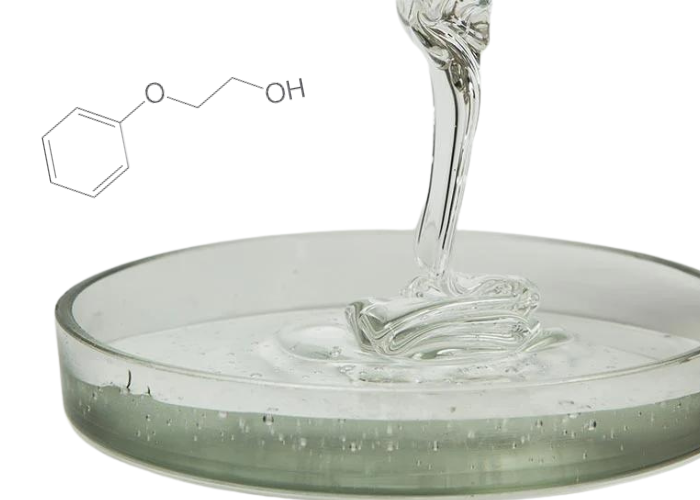
Our Phenoxyethanol is a clear, liquid preservative (INCI: Phenoxyethanol) used to help protect water-based cosmetics from bacteria. It is soluble in oil and has limited solubility in water, works across a wide pH range of 3 to 10 and is stable to heat.
It is most active against bacteria and weaker against yeast and mould, so it is normally used as part of a preservative system with a booster. Makers use it in lotions, creams, shampoos, conditioners, gels and liquid soaps, at up to 1%.
|
Liquid preservative Most active against bacteria |
Use at 0.25-1.0% Maximum 1% in cosmetics |
Works at pH 3-10 Stable to heat |
50 ml to 500 ml Four pack sizes |
Safety information: for external (cosmetic) use only. Keep out of reach of children and keep away from the eyes. Wear gloves and eye protection when handling the concentrate. Do not swallow. See Safety below and the Safety Data Sheet in the Product Documents section at the end of this page.
Specifications
| Specification | Detail |
|---|---|
| Product | Phenoxyethanol (Preservative) |
| INCI | Phenoxyethanol |
| CAS number | 122-99-6 |
| Type | Liquid preservative, most active against bacteria |
| Appearance | Clear, colourless liquid |
| Odour | Mild, faintly floral |
| Solubility | Soluble in most oils. Limited solubility in water (about 2.7 g per 100 g). Miscible with glycerine and propylene glycol |
| Typical use rate | About 0.25-1.0% of the formula. Cosmetic rules limit it to a maximum of 1%. Always test |
| Effective pH | About 3-10 |
| Heat stability | Stable up to about 85 °C |
| Compatibility | Highly ethoxylated ingredients, such as polysorbates and PEG-based emulsifiers, can reduce its effectiveness. Test your formula |
| Suitable for | Lotions, creams, shampoos, conditioners, gels, liquid soaps, toners |
| Not suitable for | Use as the only preservative where yeast and mould are a risk, or use above 1% |
| Pack Sizes | 50 ml, 100 ml, 200 ml, 500 ml |
| Storage | Tightly closed, in a cool, well-ventilated place away from heat and direct sunlight |
| Use | Raw material for makers. Formulation, preservation testing, safety assessment and labelling of finished products are the maker's responsibility. Not for internal use |
Uses
| Use | How it is used |
|---|---|
| Creams and lotions | Add at cool-down or to the water or oil phase. It is heat stable |
| Shampoos and conditioners | Add to the finished base and check your surfactant system |
| Gels and toners | Mix into the water-based phase. Pair with a booster for yeast and mould |
| Liquid soaps and body washes | Add to the finished base and mix gently |
| Preservative systems | Combine with a booster that covers yeast and mould |
| Water-based serums | Use at the low end of the range and test the product |
How to Preserve a Lotion or Cream
- Make your product. Make your cream, lotion or gel. Phenoxyethanol is heat stable, but most makers add it at cool-down with other sensitive ingredients.
- Weigh. Weigh the phenoxyethanol at your chosen rate, up to a maximum of 1%. A common starting point is about 0.5-1.0% (0.5-1.0 g per 100 g of product).
- Add and mix. Add it to the product and stir well until it is fully mixed in. In surfactant systems, make sure it is thoroughly dispersed.
- Add your booster. Add a second preservative that covers yeast and mould, following its own use rate and pH range.
- Check the pH. Test the final pH with a pH meter or good test strips. Phenoxyethanol works across about pH 3-10.
- Pack and test. Pour into clean, dry containers. If you plan to sell the product, have it tested for preservation (a challenge test).
Tip: Phenoxyethanol alone is not enough for most water-based products. Pair it with a booster that covers yeast and mould, and test the finished product.
Using It in Your Formulas ▼
These are common maker starting points, not fixed rules. Results vary with your recipe, so always test a small batch first.
| Use | Starting amount | Notes |
|---|---|---|
| Creams and lotions | About 0.5-1.0% | Use with a yeast and mould booster. Test the finished product. |
| Shampoos and washes | About 0.5-1.0% | Highly ethoxylated surfactants can reduce its effect. Test the system. |
| Conditioners | About 0.5-1.0% | Add at cool-down. Check the pH. |
| Gels and toners | About 0.5-1.0% | Use a booster for yeast and mould. |
| Absolute maximum | 1.0% | Do not go above 1%. Cosmetic rules set this limit. |
These are starting points for makers, not fixed rules. Follow your own preservation testing and the rules that apply where you sell.
Tips & Troubleshooting ▼
| Problem | Likely cause | What to try |
|---|---|---|
| Product grows mould or yeast | Phenoxyethanol is weaker against yeast and mould | Add a booster that covers yeast and mould, and test the finished product. |
| Product grows bacteria | Rate too low, contamination, or ethoxylated ingredients reducing its effect | Check your rate and your formula, use clean tools and containers, and discard spoiled batches. |
| Cloudy product | Not fully mixed in, or beyond its water solubility | Mix well. Add to the oil phase or a surfactant base if needed. |
| Preservative seems less effective | Highly ethoxylated ingredients in the formula | Test with a different preservative system, or use a challenge test to check. |
| Slight floral smell | Odour of the preservative | This is mild and usually blends into the fragrance of the product. |
| Stinging on the skin | Rate too high, or sensitive skin | Reduce the rate, keep to the 1% maximum and patch test. |
Safety & Selling Your Products ▼
This product is a cosmetic raw material for external use only. Do not swallow it, keep it out of reach of children and keep it away from the eyes. Wear gloves and eye protection when handling the concentrated product, patch test finished products before first use and stop using a product if irritation occurs.
Phenoxyethanol can irritate the eyes and may cause irritation if it is swallowed. Wear gloves and eye protection when handling the concentrate, avoid breathing vapour and keep it away from heat. Cosmetic rules limit it to a maximum of 1% in finished products, so measure it accurately.
Selling what you make? This is a raw material for makers. The formulation, preservation, safety assessment, labelling and any regulatory requirements for your finished cosmetics or soap (including the NZ cosmetic rules) are your responsibility, and health or treatment claims should not be made for your products. Preservatives do not replace good manufacturing practice. Use clean tools and containers, and have products intended for sale tested for preservation. Contact us at info@purefx.co.nz if you need product information.
Frequently Asked Questions ▼
What is phenoxyethanol?
It is a liquid preservative that helps protect water-based cosmetics from bacteria. It is widely used in creams, lotions, shampoos and gels.
How much do I use?
About 0.25-1.0% of the formula, with 1% as the maximum allowed in cosmetics. Always test.
Is it a complete preservative on its own?
Not usually. It is most active against bacteria, so it is normally paired with a booster that covers yeast and mould.
What pH does it work at?
About pH 3-10, so it suits a wide range of products.
Does heat damage it?
No. It is stable up to about 85 °C, but many makers add it at cool-down.
Can I use it in oil-only products?
Oil-only products do not need a preservative. It is needed once water, hydrosols, aloe or extracts are added.
Does it work with polysorbates and PEG emulsifiers?
Highly ethoxylated ingredients can reduce its effectiveness. Test your formula, or consider another preservative.
Do I still need preservation testing?
If you sell your products, a challenge test is recommended, especially for new or changed formulas.
Is it for internal use?
No. We sell it as a cosmetic raw material for external use only.
Sizes & Price
| Pack | Price | Price per 100 ml |
|---|---|---|
| 50 ml | $6.00 | $12.00 |
| 100 ml | $10.00 | $10.00 |
| 200 ml | $19.00 | $9.50 |
| 500 ml | $42.00 | $8.40 |
Pairs Well With
Pair with aloe vera gel, hydrosols or vegetable glycerine, and thicken with xanthan gum. Compare Geogard 221, or browse our preservatives for a booster that covers yeast and mould. Use in creams made with BTMS-50 or Coco Caprylate, and add vitamin E oil. See emulsifiers and thickeners. |
 Product Documents
|
Couldn't load pickup availability
Phenoxyethanol (Preservative) (Liquid Preservative for Water-Based Cosmetics)
Our Phenoxyethanol is a clear, liquid preservative (INCI: Phenoxyethanol) used to help protect water-based cosmetics from bacteria. It is soluble in oil and has limited solubility in water, works across a wide pH range of 3 to 10 and is stable to heat.
It is most active against bacteria and weaker against yeast and mould, so it is normally used as part of a preservative system with a booster. Makers use it in lotions, creams, shampoos, conditioners, gels and liquid soaps, at up to 1%.
|
Liquid preservative Most active against bacteria |
Use at 0.25-1.0% Maximum 1% in cosmetics |
Works at pH 3-10 Stable to heat |
50 ml to 500 ml Four pack sizes |
Safety information: for external (cosmetic) use only. Keep out of reach of children and keep away from the eyes. Wear gloves and eye protection when handling the concentrate. Do not swallow. See Safety below and the Safety Data Sheet in the Product Documents section at the end of this page.
Specifications
| Specification | Detail |
|---|---|
| Product | Phenoxyethanol (Preservative) |
| INCI | Phenoxyethanol |
| CAS number | 122-99-6 |
| Type | Liquid preservative, most active against bacteria |
| Appearance | Clear, colourless liquid |
| Odour | Mild, faintly floral |
| Solubility | Soluble in most oils. Limited solubility in water (about 2.7 g per 100 g). Miscible with glycerine and propylene glycol |
| Typical use rate | About 0.25-1.0% of the formula. Cosmetic rules limit it to a maximum of 1%. Always test |
| Effective pH | About 3-10 |
| Heat stability | Stable up to about 85 °C |
| Compatibility | Highly ethoxylated ingredients, such as polysorbates and PEG-based emulsifiers, can reduce its effectiveness. Test your formula |
| Suitable for | Lotions, creams, shampoos, conditioners, gels, liquid soaps, toners |
| Not suitable for | Use as the only preservative where yeast and mould are a risk, or use above 1% |
| Pack Sizes | 50 ml, 100 ml, 200 ml, 500 ml |
| Storage | Tightly closed, in a cool, well-ventilated place away from heat and direct sunlight |
| Use | Raw material for makers. Formulation, preservation testing, safety assessment and labelling of finished products are the maker's responsibility. Not for internal use |
Uses
| Use | How it is used |
|---|---|
| Creams and lotions | Add at cool-down or to the water or oil phase. It is heat stable |
| Shampoos and conditioners | Add to the finished base and check your surfactant system |
| Gels and toners | Mix into the water-based phase. Pair with a booster for yeast and mould |
| Liquid soaps and body washes | Add to the finished base and mix gently |
| Preservative systems | Combine with a booster that covers yeast and mould |
| Water-based serums | Use at the low end of the range and test the product |
How to Preserve a Lotion or Cream
- Make your product. Make your cream, lotion or gel. Phenoxyethanol is heat stable, but most makers add it at cool-down with other sensitive ingredients.
- Weigh. Weigh the phenoxyethanol at your chosen rate, up to a maximum of 1%. A common starting point is about 0.5-1.0% (0.5-1.0 g per 100 g of product).
- Add and mix. Add it to the product and stir well until it is fully mixed in. In surfactant systems, make sure it is thoroughly dispersed.
- Add your booster. Add a second preservative that covers yeast and mould, following its own use rate and pH range.
- Check the pH. Test the final pH with a pH meter or good test strips. Phenoxyethanol works across about pH 3-10.
- Pack and test. Pour into clean, dry containers. If you plan to sell the product, have it tested for preservation (a challenge test).
Tip: Phenoxyethanol alone is not enough for most water-based products. Pair it with a booster that covers yeast and mould, and test the finished product.
Using It in Your Formulas ▼
These are common maker starting points, not fixed rules. Results vary with your recipe, so always test a small batch first.
| Use | Starting amount | Notes |
|---|---|---|
| Creams and lotions | About 0.5-1.0% | Use with a yeast and mould booster. Test the finished product. |
| Shampoos and washes | About 0.5-1.0% | Highly ethoxylated surfactants can reduce its effect. Test the system. |
| Conditioners | About 0.5-1.0% | Add at cool-down. Check the pH. |
| Gels and toners | About 0.5-1.0% | Use a booster for yeast and mould. |
| Absolute maximum | 1.0% | Do not go above 1%. Cosmetic rules set this limit. |
These are starting points for makers, not fixed rules. Follow your own preservation testing and the rules that apply where you sell.
Tips & Troubleshooting ▼
| Problem | Likely cause | What to try |
|---|---|---|
| Product grows mould or yeast | Phenoxyethanol is weaker against yeast and mould | Add a booster that covers yeast and mould, and test the finished product. |
| Product grows bacteria | Rate too low, contamination, or ethoxylated ingredients reducing its effect | Check your rate and your formula, use clean tools and containers, and discard spoiled batches. |
| Cloudy product | Not fully mixed in, or beyond its water solubility | Mix well. Add to the oil phase or a surfactant base if needed. |
| Preservative seems less effective | Highly ethoxylated ingredients in the formula | Test with a different preservative system, or use a challenge test to check. |
| Slight floral smell | Odour of the preservative | This is mild and usually blends into the fragrance of the product. |
| Stinging on the skin | Rate too high, or sensitive skin | Reduce the rate, keep to the 1% maximum and patch test. |
Safety & Selling Your Products ▼
This product is a cosmetic raw material for external use only. Do not swallow it, keep it out of reach of children and keep it away from the eyes. Wear gloves and eye protection when handling the concentrated product, patch test finished products before first use and stop using a product if irritation occurs.
Phenoxyethanol can irritate the eyes and may cause irritation if it is swallowed. Wear gloves and eye protection when handling the concentrate, avoid breathing vapour and keep it away from heat. Cosmetic rules limit it to a maximum of 1% in finished products, so measure it accurately.
Selling what you make? This is a raw material for makers. The formulation, preservation, safety assessment, labelling and any regulatory requirements for your finished cosmetics or soap (including the NZ cosmetic rules) are your responsibility, and health or treatment claims should not be made for your products. Preservatives do not replace good manufacturing practice. Use clean tools and containers, and have products intended for sale tested for preservation. Contact us at info@purefx.co.nz if you need product information.
Frequently Asked Questions ▼
What is phenoxyethanol?
It is a liquid preservative that helps protect water-based cosmetics from bacteria. It is widely used in creams, lotions, shampoos and gels.
How much do I use?
About 0.25-1.0% of the formula, with 1% as the maximum allowed in cosmetics. Always test.
Is it a complete preservative on its own?
Not usually. It is most active against bacteria, so it is normally paired with a booster that covers yeast and mould.
What pH does it work at?
About pH 3-10, so it suits a wide range of products.
Does heat damage it?
No. It is stable up to about 85 °C, but many makers add it at cool-down.
Can I use it in oil-only products?
Oil-only products do not need a preservative. It is needed once water, hydrosols, aloe or extracts are added.
Does it work with polysorbates and PEG emulsifiers?
Highly ethoxylated ingredients can reduce its effectiveness. Test your formula, or consider another preservative.
Do I still need preservation testing?
If you sell your products, a challenge test is recommended, especially for new or changed formulas.
Is it for internal use?
No. We sell it as a cosmetic raw material for external use only.
Sizes & Price
| Pack | Price | Price per 100 ml |
|---|---|---|
| 50 ml | $6.00 | $12.00 |
| 100 ml | $10.00 | $10.00 |
| 200 ml | $19.00 | $9.50 |
| 500 ml | $42.00 | $8.40 |
Pairs Well With
Pair with aloe vera gel, hydrosols or vegetable glycerine, and thicken with xanthan gum. Compare Geogard 221, or browse our preservatives for a booster that covers yeast and mould. Use in creams made with BTMS-50 or Coco Caprylate, and add vitamin E oil. See emulsifiers and thickeners. |
|
Product Documents
|
