Beeswax Refined Pellets
Beeswax Refined Pellets
Beeswax Refined Pellets (Refined New Zealand Beeswax for Balms, Candles and Polish)
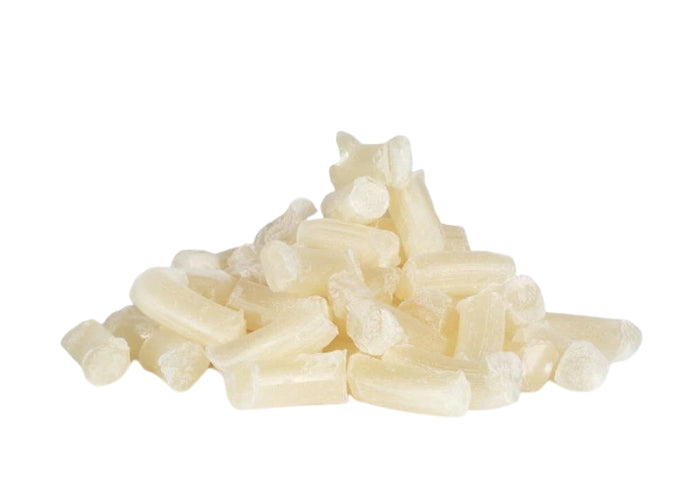
Our Beeswax Refined Pellets are New Zealand beeswax that has been refined to remove impurities and formed into easy-to-measure pellets. They melt quickly and evenly, and they have a pale golden colour and a light honey aroma, so they cause little discolouration in finished products.
Beeswax adds firmness, body and a protective feel to lip balms, salves, lotion bars, creams, soap, candles and wood polish. It is 100% beeswax with no additives, and we supply it from Kaiapoi, Christchurch, in packs from 100 g up to 5 kg. Every order is backed by a Specifications sheet, Safety Data Sheet, Ingredient Statement and Quick Guide, all linked in the Product Documents section below.
|
Refined NZ beeswax Pale golden, light honey aroma |
Melts at about 62-65 °C Easy-melt pellets |
Use at 2-40% Depends on the product |
Balms, candles, polish Test first |
Safety information: for full hazard, handling and safety information, please see the Safety Data Sheet in the Product Documents section below.
Specifications
| Specification | Detail |
|---|---|
| Product | Beeswax Refined Pellets |
| Type | Refined New Zealand beeswax pellets for balms, creams, soap, candles and polish |
| Composition | Beeswax (INCI: Cera Alba), 100%. Refined New Zealand beeswax. CAS 8012-89-3. No added fragrance or dye |
| Appearance | Pale golden to cream pellets with a light honey aroma |
| Melting Point | Typically about 62-65 °C (144-149 °F) |
| Typical Quality | Typical values for refined beeswax, not for a particular batch: acid value 17-24 mg KOH/g, ester value 70-80, saponification value 87-104 |
| Solubility | Insoluble in water. Dissolves into warm oils and butters |
| Typical Use Rate | About 2-40% depending on the product. For balms, about 1 part beeswax to 3-5 parts oil. Always test |
| How to Melt | Melt slowly in a double boiler or other controlled heat. Do not heat above 85 °C |
| Candle Making | Melt to about 85 °C, add fragrance (up to about 6%), stir for 2 minutes and pour at about 75-80 °C. Beeswax can be hard to wick, so test |
| Wick Guidance | ECO wicks, sized to the candle. Beeswax is firm, so test and go up a size if needed (see the wick guide below) |
| Best Suited For | Lip balms, salves, lotion bars, creams, soap, candles, wood polish and craft projects |
| Vegan | No. Beeswax is a bee product |
| Pack Sizes | 100 g, 200 g, 400 g, 1 kg, 2 kg, 5 kg |
| Storage | Cool, dry place, sealed, away from heat and sunlight |
| Shelf Life | Typically 2 years or more when stored sealed, cool and dry |
| Use | Raw material for makers. Safety assessment and labelling of finished products are the maker's responsibility. Not for food use |
How to Use Beeswax Pellets
- Weigh. Weigh the oils, butters and beeswax in your recipe. For a balm, start at about 1 part beeswax to 3-5 parts oil by weight, using more beeswax for a firmer balm.
- Melt. Put the beeswax in with the oils and butters in a double boiler or other controlled heat, stirring until the mix is clear. Do not heat above 85 °C. Never heat over a direct flame or leave it unattended.
- Cool a little. Take off the heat. Add heat-sensitive ingredients such as essential oils, fragrance or vitamin E once the mix has cooled to a safe temperature for them.
- Pour. Pour into tubes, tins or jars before it sets. Work quickly, as beeswax sets fast.
- Set. Let the product set undisturbed, away from draughts, to reduce cracks and sinkholes.
- Test. Check the firmness and glide, then adjust the beeswax amount a little at a time in the next batch.
Tip: always make a small test batch first. Every recipe behaves a little differently.
What Is Beeswax? ▼
Beeswax is the natural wax honey bees make to build their honeycomb. Crude beeswax is melted, filtered and refined to remove impurities, which gives a clean wax that is easy to work with. It is firm at room temperature, softens when warm and blends easily into oils and butters.
That makes it a popular structuring ingredient: it adds firmness and a protective, slightly waxy feel to balms, lip products and creams, and it makes candles that burn with a light honey scent. It is insoluble in water, so it does not mix into water-based products on its own.
Good to know: beeswax is a bee product, so it is not vegan, and people with a bee product, honey or propolis allergy should take care. Over time beeswax can develop a harmless pale powdery film on the surface, called bloom. It can be wiped off or melted back in.
Choosing the Right Wax or Thickener ▼
| Product | Best for | Notes |
|---|---|---|
| Beeswax Refined Pellets (this product) | Balms, lip balms, salves, lotion bars, candles and polish | A natural wax with a pale golden colour and light honey aroma. Not vegan. |
| Castor Wax Flakes | Firming balms and sticks, raising the melt point | A harder, more brittle wax. Often used in small amounts with beeswax. |
| Carnauba Wax | Hard, glossy sticks and polishes | A plant wax with a higher melt point than beeswax. A plant-based alternative. |
| Emulsifying Wax (Neowax B200) | Creams and lotions that mix oil and water | An emulsifier. Beeswax thickens the oil phase but does not emulsify. |
| Soy and other candle waxes | Container candles and wax melts | Often blended with a little beeswax. See Blending Ideas below. |
| Butters and waxes | Texture and richness | Browse our full range to build a balanced formula. |
Uses & Project Ideas ▼
Lip balms
Gives structure and a protective layer. Combine with butters and oils. Browse our lip balm bases, lip balm containers and lip balm flavours.
Salves and balms
Melt with carrier oils and butters for solid balms. About 1 part beeswax to 3-5 parts oil is a common starting point.
Lotion bars
Beeswax holds a lotion bar together. Blend with butters for glide.
Creams and lotions
Thickens the oil phase. Use it alongside an emulsifier such as Emulsifying Wax (Neowax B200).
Soap making
Some makers add a small amount to firm a bar or to make melt and pour soap hold its shape. Test a small batch. Browse our soap additives.
Candles
Pour pure beeswax candles or blend it into other waxes. See Making Beeswax Candles below.
Wood polish and leather care
Melted with oil for a protective, natural-looking finish. Test on an offcut first.
Beeswax wraps and crafts
A popular craft ingredient for reusable wraps, thread and cord waxing. This is sold as a craft raw material, not as a food-grade product, so if you make anything for food contact it is your responsibility to check it is suitable.
Where to Start: Use Rates ▼
The usual range is about 2-40% depending on the product. These are starting points, not fixed rules. Always make a small test batch and adjust a little at a time.
| Product | Where to start | Notes |
|---|---|---|
| Lip balms and balm sticks | Toward the higher end of the range | Firm and protective. Too much makes the balm stiff and waxy. |
| Salves and balms | About 1 part beeswax to 3-5 parts oil | Use more beeswax for a firmer balm. |
| Lotion bars | Higher end, with butters | Beeswax holds the bar together. Butters add glide. |
| Creams and lotions | Toward the lower end of the range | Thickens the oil phase. You still need an emulsifier. |
| Soap | Test a small batch | Small amounts only. |
| Candles | Alone or blended | Melt to 85 °C, fragrance up to 6%, pour at 75-80 °C. Hard to wick, so test. |
| Wood polish | Melted with oil | Test on an offcut first. |
Making Beeswax Candles ▼
Beeswax makes firm, slow-burning candles with a light honey scent. It is known for being harder to wick than soy or paraffin, so make a test candle and expect to adjust the wick size.
- Prepare. Use a clean, dry container or mould, warmed slightly if you can. Fix a wick to the base with a wick tab and sticker, and keep it centred.
- Melt. Melt the beeswax slowly in a double boiler to about 85 °C. Never heat over a direct flame or leave it unattended.
- Add fragrance. Take off the heat, add fragrance oil (about 6% is a common starting point) and stir for 2 minutes. Check the flash point of your fragrance first. Many makers use only the natural honey scent.
- Pour. Pour at about 75-80 °C, slowly and near the wick. Beeswax sets fast, so work steadily.
- Top up. If a dip forms around the wick as the candle cools, pour a small top-up before it is fully cool.
- Cure. Trim the wick to about 5 mm and cure for about 2 weeks before a test burn for the best scent.
These are starting points from general candle-making guidance and have not been tested by PureFX. Always make a small test candle first.
Blending Ideas ▼
These are starting points only and have not been tested by PureFX, so test a small batch first.
| Blend with | Idea | Notes |
|---|---|---|
| Carrier oils | 1 part beeswax to 3-5 parts oil for a balm | Use more beeswax for a firmer balm. |
| Cocoa Butter Refined, Mango Butter or Kokum Butter | Butters for richness and glide | Beeswax gives structure and butters give a creamy feel. |
| Castor Wax Flakes | A small share for a firmer stick | Both are waxes, so adjust one at a time. |
| Soy waxes | A small share of beeswax for wax melts and candles | Some makers add a little beeswax to soy to make it firmer and help melts release from moulds. Start low and test. |
Changing the ratios changes the melt point, firmness and feel, so always test a blend before selling products made with it.
Wick Guide for Beeswax Candles ▼
Wick size is the most important choice in a candle, and beeswax is known to be harder to wick than other waxes. These are starting points only. Always burn test, then adjust one size at a time.
| Item | Where to start | Notes |
|---|---|---|
| ECO wicks | Choose by the width of the candle, then test. Beeswax is firm, so you may need to go up a size | Go up a size if the flame is small or the candle tunnels, and down if the flame is large or sooty. |
| Wick tabs | One on every wick | Holds the wick upright and fixed to the base of the container. |
| Wick holders and wick stickers | One per wick | Keeps the wick centred while the wax sets. |
| Wick trimmer | Before every burn | Trim to about 5 mm for a steady flame. |
Troubleshooting ▼
| Problem | Likely cause | What to try |
|---|---|---|
| Cracks or sinkholes | Cooling too fast | Cool slowly, away from draughts. For candles, pour a small top-up. |
| Too hard or waxy | Too much beeswax | Reduce the amount or add more oil. |
| Too soft | Not enough beeswax | Add a little more, a small amount at a time. |
| White powdery film | Natural bloom | Harmless. Wipe it off or warm the surface gently. |
| Darkened or dull aroma | Overheated | Keep below 85 °C. |
| Candle tunnels or flame is small | Wick too small for a firm wax | Try the next wick size up. |
| Large flame or soot | Wick too large | Try the next wick size down and trim to 5 mm. |
| Wax sticks to the mould | Mould dirty or candle not fully cool | Use a clean mould, cool completely and test a mould release made for candles. |
Sizes & Price per kg
| Size | Price | Price per kg |
|---|---|---|
| 100 g | $10.50 | $105.00 |
| 200 g | $19.50 | $97.50 |
| 400 g | $36.00 | $90.00 |
| 1 kg | $62.50 | $62.50 |
| 2 kg | $120.00 | $60.00 |
| 5 kg | $300.00 | $60.00 |
Safety & Selling Your Products ▼
Molten wax can burn badly. Keep melting wax away from children and pets, never heat it over a direct flame, and never leave it unattended. Wear heat-resistant gloves, have a lid or damp cloth nearby for emergencies, and do not use water on a wax fire.
If you use it in candles, never leave a burning candle unattended, keep candles away from children, pets, draughts and anything flammable, and trim the wick to about 5 mm before each burn.
Selling your products? This is a raw material for makers. The safety assessment, labelling and any regulatory requirements for your finished balm, cosmetic, soap or candle are your responsibility. Beeswax is a bee product, so it is not vegan, and your labels should reflect this. Use the Ingredient Statement and Safety Data Sheet below together with the safety data for everything else you add.
Frequently Asked Questions ▼
Is this New Zealand beeswax?
Yes. It is refined New Zealand beeswax.
What is the melting point?
Typically about 62-65 °C.
What colour is it?
Pale golden to cream, with a light honey aroma. Refining removes impurities and gives a clean wax that causes little discolouration.
How much should I use?
It depends on the product, from about 2-40%. For a balm, a common starting point is 1 part beeswax to 3-5 parts oil. Always test.
Does it dissolve in water?
No. It is insoluble in water and dissolves into warm oils and butters.
Is it an emulsifier?
No. It thickens the oil phase but does not mix oil and water. For creams and lotions, use it with an emulsifier such as Emulsifying Wax (Neowax B200).
Can I make candles with it?
Yes. Melt to about 85 °C, add fragrance (up to about 6%), and pour at about 75-80 °C. Beeswax can be hard to wick, so test. See Making Beeswax Candles above.
Which wick should I use?
It depends on your candle. See the Wick Guide above for ECO wick starting points, and always burn test, as beeswax is firm and can be hard to wick.
Can I add it to soy wax?
Some makers add a small amount of beeswax to soy wax to firm candles and wax melts. Start low and test a small batch.
Can I use it in lip balm?
Yes. It is widely used in lip balms for structure and a protective layer. Combine it with butters and oils.
Why has my beeswax got a white film?
This is natural bloom and is harmless. Wipe it off or melt it back in.
Is it vegan or food grade?
No. Beeswax is a bee product, so it is not vegan. It is sold as a raw material for craft, cosmetic and candle use, not as a food-grade product.
Does it contain palm oil?
No. It is 100% beeswax.
How should I store it?
Keep it sealed in a cool, dry place away from heat and sunlight. It keeps well. Typical shelf life is 2 years or more when stored this way.
Pairs Well With
Pair beeswax with cocoa butter, mango butter, kokum butter and your choice of carrier oil from our oils, butters and waxes. Use it with Castor Wax Flakes for firmer sticks, or with Emulsifying Wax (Neowax B200) in creams. Fill lip balm containers and add lip balm flavours. For candles, see our candle waxes, fragrance oils, ECO wicks and candle jars and glassware. |

Product Documents
|
Couldn't load pickup availability
Beeswax Refined Pellets (Refined New Zealand Beeswax for Balms, Candles and Polish)
Our Beeswax Refined Pellets are New Zealand beeswax that has been refined to remove impurities and formed into easy-to-measure pellets. They melt quickly and evenly, and they have a pale golden colour and a light honey aroma, so they cause little discolouration in finished products.
Beeswax adds firmness, body and a protective feel to lip balms, salves, lotion bars, creams, soap, candles and wood polish. It is 100% beeswax with no additives, and we supply it from Kaiapoi, Christchurch, in packs from 100 g up to 5 kg. Every order is backed by a Specifications sheet, Safety Data Sheet, Ingredient Statement and Quick Guide, all linked in the Product Documents section below.
|
Refined NZ beeswax Pale golden, light honey aroma |
Melts at about 62-65 °C Easy-melt pellets |
Use at 2-40% Depends on the product |
Balms, candles, polish Test first |
Safety information: for full hazard, handling and safety information, please see the Safety Data Sheet in the Product Documents section below.
Specifications
| Specification | Detail |
|---|---|
| Product | Beeswax Refined Pellets |
| Type | Refined New Zealand beeswax pellets for balms, creams, soap, candles and polish |
| Composition | Beeswax (INCI: Cera Alba), 100%. Refined New Zealand beeswax. CAS 8012-89-3. No added fragrance or dye |
| Appearance | Pale golden to cream pellets with a light honey aroma |
| Melting Point | Typically about 62-65 °C (144-149 °F) |
| Typical Quality | Typical values for refined beeswax, not for a particular batch: acid value 17-24 mg KOH/g, ester value 70-80, saponification value 87-104 |
| Solubility | Insoluble in water. Dissolves into warm oils and butters |
| Typical Use Rate | About 2-40% depending on the product. For balms, about 1 part beeswax to 3-5 parts oil. Always test |
| How to Melt | Melt slowly in a double boiler or other controlled heat. Do not heat above 85 °C |
| Candle Making | Melt to about 85 °C, add fragrance (up to about 6%), stir for 2 minutes and pour at about 75-80 °C. Beeswax can be hard to wick, so test |
| Wick Guidance | ECO wicks, sized to the candle. Beeswax is firm, so test and go up a size if needed (see the wick guide below) |
| Best Suited For | Lip balms, salves, lotion bars, creams, soap, candles, wood polish and craft projects |
| Vegan | No. Beeswax is a bee product |
| Pack Sizes | 100 g, 200 g, 400 g, 1 kg, 2 kg, 5 kg |
| Storage | Cool, dry place, sealed, away from heat and sunlight |
| Shelf Life | Typically 2 years or more when stored sealed, cool and dry |
| Use | Raw material for makers. Safety assessment and labelling of finished products are the maker's responsibility. Not for food use |
How to Use Beeswax Pellets
- Weigh. Weigh the oils, butters and beeswax in your recipe. For a balm, start at about 1 part beeswax to 3-5 parts oil by weight, using more beeswax for a firmer balm.
- Melt. Put the beeswax in with the oils and butters in a double boiler or other controlled heat, stirring until the mix is clear. Do not heat above 85 °C. Never heat over a direct flame or leave it unattended.
- Cool a little. Take off the heat. Add heat-sensitive ingredients such as essential oils, fragrance or vitamin E once the mix has cooled to a safe temperature for them.
- Pour. Pour into tubes, tins or jars before it sets. Work quickly, as beeswax sets fast.
- Set. Let the product set undisturbed, away from draughts, to reduce cracks and sinkholes.
- Test. Check the firmness and glide, then adjust the beeswax amount a little at a time in the next batch.
Tip: always make a small test batch first. Every recipe behaves a little differently.
What Is Beeswax? ▼
Beeswax is the natural wax honey bees make to build their honeycomb. Crude beeswax is melted, filtered and refined to remove impurities, which gives a clean wax that is easy to work with. It is firm at room temperature, softens when warm and blends easily into oils and butters.
That makes it a popular structuring ingredient: it adds firmness and a protective, slightly waxy feel to balms, lip products and creams, and it makes candles that burn with a light honey scent. It is insoluble in water, so it does not mix into water-based products on its own.
Good to know: beeswax is a bee product, so it is not vegan, and people with a bee product, honey or propolis allergy should take care. Over time beeswax can develop a harmless pale powdery film on the surface, called bloom. It can be wiped off or melted back in.
Choosing the Right Wax or Thickener ▼
| Product | Best for | Notes |
|---|---|---|
| Beeswax Refined Pellets (this product) | Balms, lip balms, salves, lotion bars, candles and polish | A natural wax with a pale golden colour and light honey aroma. Not vegan. |
| Castor Wax Flakes | Firming balms and sticks, raising the melt point | A harder, more brittle wax. Often used in small amounts with beeswax. |
| Carnauba Wax | Hard, glossy sticks and polishes | A plant wax with a higher melt point than beeswax. A plant-based alternative. |
| Emulsifying Wax (Neowax B200) | Creams and lotions that mix oil and water | An emulsifier. Beeswax thickens the oil phase but does not emulsify. |
| Soy and other candle waxes | Container candles and wax melts | Often blended with a little beeswax. See Blending Ideas below. |
| Butters and waxes | Texture and richness | Browse our full range to build a balanced formula. |
Uses & Project Ideas ▼
Lip balms
Gives structure and a protective layer. Combine with butters and oils. Browse our lip balm bases, lip balm containers and lip balm flavours.
Salves and balms
Melt with carrier oils and butters for solid balms. About 1 part beeswax to 3-5 parts oil is a common starting point.
Lotion bars
Beeswax holds a lotion bar together. Blend with butters for glide.
Creams and lotions
Thickens the oil phase. Use it alongside an emulsifier such as Emulsifying Wax (Neowax B200).
Soap making
Some makers add a small amount to firm a bar or to make melt and pour soap hold its shape. Test a small batch. Browse our soap additives.
Candles
Pour pure beeswax candles or blend it into other waxes. See Making Beeswax Candles below.
Wood polish and leather care
Melted with oil for a protective, natural-looking finish. Test on an offcut first.
Beeswax wraps and crafts
A popular craft ingredient for reusable wraps, thread and cord waxing. This is sold as a craft raw material, not as a food-grade product, so if you make anything for food contact it is your responsibility to check it is suitable.
Where to Start: Use Rates ▼
The usual range is about 2-40% depending on the product. These are starting points, not fixed rules. Always make a small test batch and adjust a little at a time.
| Product | Where to start | Notes |
|---|---|---|
| Lip balms and balm sticks | Toward the higher end of the range | Firm and protective. Too much makes the balm stiff and waxy. |
| Salves and balms | About 1 part beeswax to 3-5 parts oil | Use more beeswax for a firmer balm. |
| Lotion bars | Higher end, with butters | Beeswax holds the bar together. Butters add glide. |
| Creams and lotions | Toward the lower end of the range | Thickens the oil phase. You still need an emulsifier. |
| Soap | Test a small batch | Small amounts only. |
| Candles | Alone or blended | Melt to 85 °C, fragrance up to 6%, pour at 75-80 °C. Hard to wick, so test. |
| Wood polish | Melted with oil | Test on an offcut first. |
Making Beeswax Candles ▼
Beeswax makes firm, slow-burning candles with a light honey scent. It is known for being harder to wick than soy or paraffin, so make a test candle and expect to adjust the wick size.
- Prepare. Use a clean, dry container or mould, warmed slightly if you can. Fix a wick to the base with a wick tab and sticker, and keep it centred.
- Melt. Melt the beeswax slowly in a double boiler to about 85 °C. Never heat over a direct flame or leave it unattended.
- Add fragrance. Take off the heat, add fragrance oil (about 6% is a common starting point) and stir for 2 minutes. Check the flash point of your fragrance first. Many makers use only the natural honey scent.
- Pour. Pour at about 75-80 °C, slowly and near the wick. Beeswax sets fast, so work steadily.
- Top up. If a dip forms around the wick as the candle cools, pour a small top-up before it is fully cool.
- Cure. Trim the wick to about 5 mm and cure for about 2 weeks before a test burn for the best scent.
These are starting points from general candle-making guidance and have not been tested by PureFX. Always make a small test candle first.
Blending Ideas ▼
These are starting points only and have not been tested by PureFX, so test a small batch first.
| Blend with | Idea | Notes |
|---|---|---|
| Carrier oils | 1 part beeswax to 3-5 parts oil for a balm | Use more beeswax for a firmer balm. |
| Cocoa Butter Refined, Mango Butter or Kokum Butter | Butters for richness and glide | Beeswax gives structure and butters give a creamy feel. |
| Castor Wax Flakes | A small share for a firmer stick | Both are waxes, so adjust one at a time. |
| Soy waxes | A small share of beeswax for wax melts and candles | Some makers add a little beeswax to soy to make it firmer and help melts release from moulds. Start low and test. |
Changing the ratios changes the melt point, firmness and feel, so always test a blend before selling products made with it.
Wick Guide for Beeswax Candles ▼
Wick size is the most important choice in a candle, and beeswax is known to be harder to wick than other waxes. These are starting points only. Always burn test, then adjust one size at a time.
| Item | Where to start | Notes |
|---|---|---|
| ECO wicks | Choose by the width of the candle, then test. Beeswax is firm, so you may need to go up a size | Go up a size if the flame is small or the candle tunnels, and down if the flame is large or sooty. |
| Wick tabs | One on every wick | Holds the wick upright and fixed to the base of the container. |
| Wick holders and wick stickers | One per wick | Keeps the wick centred while the wax sets. |
| Wick trimmer | Before every burn | Trim to about 5 mm for a steady flame. |
Troubleshooting ▼
| Problem | Likely cause | What to try |
|---|---|---|
| Cracks or sinkholes | Cooling too fast | Cool slowly, away from draughts. For candles, pour a small top-up. |
| Too hard or waxy | Too much beeswax | Reduce the amount or add more oil. |
| Too soft | Not enough beeswax | Add a little more, a small amount at a time. |
| White powdery film | Natural bloom | Harmless. Wipe it off or warm the surface gently. |
| Darkened or dull aroma | Overheated | Keep below 85 °C. |
| Candle tunnels or flame is small | Wick too small for a firm wax | Try the next wick size up. |
| Large flame or soot | Wick too large | Try the next wick size down and trim to 5 mm. |
| Wax sticks to the mould | Mould dirty or candle not fully cool | Use a clean mould, cool completely and test a mould release made for candles. |
Sizes & Price per kg
| Size | Price | Price per kg |
|---|---|---|
| 100 g | $10.50 | $105.00 |
| 200 g | $19.50 | $97.50 |
| 400 g | $36.00 | $90.00 |
| 1 kg | $62.50 | $62.50 |
| 2 kg | $120.00 | $60.00 |
| 5 kg | $300.00 | $60.00 |
Safety & Selling Your Products ▼
Molten wax can burn badly. Keep melting wax away from children and pets, never heat it over a direct flame, and never leave it unattended. Wear heat-resistant gloves, have a lid or damp cloth nearby for emergencies, and do not use water on a wax fire.
If you use it in candles, never leave a burning candle unattended, keep candles away from children, pets, draughts and anything flammable, and trim the wick to about 5 mm before each burn.
Selling your products? This is a raw material for makers. The safety assessment, labelling and any regulatory requirements for your finished balm, cosmetic, soap or candle are your responsibility. Beeswax is a bee product, so it is not vegan, and your labels should reflect this. Use the Ingredient Statement and Safety Data Sheet below together with the safety data for everything else you add.
Frequently Asked Questions ▼
Is this New Zealand beeswax?
Yes. It is refined New Zealand beeswax.
What is the melting point?
Typically about 62-65 °C.
What colour is it?
Pale golden to cream, with a light honey aroma. Refining removes impurities and gives a clean wax that causes little discolouration.
How much should I use?
It depends on the product, from about 2-40%. For a balm, a common starting point is 1 part beeswax to 3-5 parts oil. Always test.
Does it dissolve in water?
No. It is insoluble in water and dissolves into warm oils and butters.
Is it an emulsifier?
No. It thickens the oil phase but does not mix oil and water. For creams and lotions, use it with an emulsifier such as Emulsifying Wax (Neowax B200).
Can I make candles with it?
Yes. Melt to about 85 °C, add fragrance (up to about 6%), and pour at about 75-80 °C. Beeswax can be hard to wick, so test. See Making Beeswax Candles above.
Which wick should I use?
It depends on your candle. See the Wick Guide above for ECO wick starting points, and always burn test, as beeswax is firm and can be hard to wick.
Can I add it to soy wax?
Some makers add a small amount of beeswax to soy wax to firm candles and wax melts. Start low and test a small batch.
Can I use it in lip balm?
Yes. It is widely used in lip balms for structure and a protective layer. Combine it with butters and oils.
Why has my beeswax got a white film?
This is natural bloom and is harmless. Wipe it off or melt it back in.
Is it vegan or food grade?
No. Beeswax is a bee product, so it is not vegan. It is sold as a raw material for craft, cosmetic and candle use, not as a food-grade product.
Does it contain palm oil?
No. It is 100% beeswax.
How should I store it?
Keep it sealed in a cool, dry place away from heat and sunlight. It keeps well. Typical shelf life is 2 years or more when stored this way.
Pairs Well With
Pair beeswax with cocoa butter, mango butter, kokum butter and your choice of carrier oil from our oils, butters and waxes. Use it with Castor Wax Flakes for firmer sticks, or with Emulsifying Wax (Neowax B200) in creams. Fill lip balm containers and add lip balm flavours. For candles, see our candle waxes, fragrance oils, ECO wicks and candle jars and glassware. |
|
Product Documents
|