Mango Butter
Mango Butter
Mango Butter (Soft, Smooth Butter for Lotions, Balms and Soap)
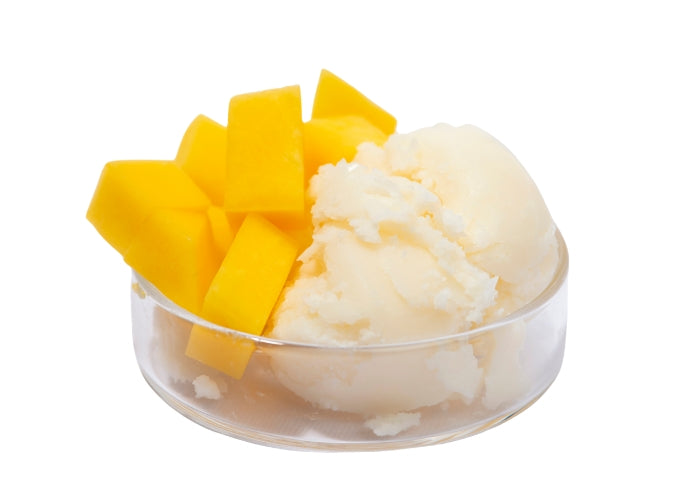
Our Mango Butter is made from the seed kernels of the mango (INCI: Mangifera Indica Seed Butter). It is expeller pressed and refined to a soft, semi-solid, white butter with very little scent and a smooth feel that melts at about 30-40 °C.
Makers use it to add softness and richness to lotions, creams, body butters, balms, soaps and hair care. It is a good alternative to shea butter when you want a lighter, less sticky feel.
|
Soft mango butter White, almost odourless |
Melts at 30-40 °C Semi-solid |
Use at 3-100% Depends on the recipe |
100 g to 1 kg Four pack sizes |
Safety information: for external (cosmetic) use only. Keep out of reach of children and keep away from the eyes. Melted butter is hot and can burn. See Safety below and the Safety Data Sheet in the Product Documents section at the end of this page.
Specifications
| Specification | Detail |
|---|---|
| Product | Mango Butter |
| INCI | Mangifera Indica Seed Butter |
| Botanical source | Mango (Mangifera indica), seed kernel |
| Origin | India |
| Process | Expeller pressed and refined |
| Appearance | Soft, semi-solid white butter |
| Odour | Almost odourless; a slight sweet, fatty note |
| Melting point | About 30-40 °C |
| Typical fatty acids | Stearic 35-45%, oleic 35-50%, palmitic 4-17%, arachidic under 6%, linoleic under 5% |
| Typical use rate | Lotions and creams 3-5%, balms 5-100%, bar soaps 3-6%, hair conditioners 2-5% |
| Suitable for | Lotions, creams, body butters, balms, bar soaps, lip care, hair conditioners |
| Not suitable for | Use in water-based products without an emulsifier, or internal use |
| Pack Sizes | 100 g, 200 g, 400 g, 1 kg |
| Storage | Tightly closed, in a cool, dry place away from heat and direct sunlight |
| Use | Raw material for makers. Formulation, safety assessment and labelling of finished products are the maker's responsibility. Not for internal use |
Uses
| Use | How it is used |
|---|---|
| Lotions and creams | Melt with the oil phase to add softness and body |
| Body butters | Whip on its own or with a liquid oil for a smooth, spreadable butter |
| Balms and lip care | Blend with wax and oil for a smooth texture |
| Bar soaps | Add to the soap oils for a creamy bar |
| Hair conditioners and hair butters | Melt into the oil phase, or warm and use as a hair treatment |
| Massage bars | Combine with wax and oil for a solid bar that melts on warm skin |
How to Make a Simple Whipped Body Butter
- Weigh. Weigh your mango butter and a liquid oil such as sweet almond oil. A traditional starting point is about 1 part butter to 1 part oil, then adjust for the texture you want.
- Melt. Melt them together gently in a double boiler over low heat. Never heat over a direct flame or leave it unattended.
- Cool. Remove from the heat and let the mixture cool until it just starts to firm at the edges. A short stay in the fridge speeds this up.
- Whip. Whip with a hand mixer until light and fluffy. Add a little vitamin E oil or fragrance at this stage if you wish.
- Pack. Spoon into clean, dry jars and label them.
- Store. Keep in a cool place. Butter-based products without water are not usually preserved, but keep them clean, dry and sealed.
Tip: Mango butter is softer than cocoa or kokum butter. Blend it with a firmer butter for a body butter that holds its shape.
Using It in Your Formulas ▼
These are common maker starting points, not fixed rules. Results vary with your recipe, so always test a small batch first.
| Use | Starting amount | Notes |
|---|---|---|
| Lotions and creams | About 3-5% | Melt with the oil phase of the recipe. |
| Balms | About 5-100% | Blend with oils and waxes to set the firmness you want. |
| Bar soaps | About 3-6% | Add to the soap oils. Larger amounts can make soap firmer and quicker to trace. |
| Hair conditioners | About 2-5% | Melt into the oil phase. |
These are starting points for makers, not fixed rules. Results vary with your recipe, so test a small batch first.
Tips & Troubleshooting ▼
| Problem | Likely cause | What to try |
|---|---|---|
| Grainy texture | The butter cooled slowly and its fats set in crystals | Melt fully, then cool quickly (fridge or freezer for a few minutes) while stirring, then whip. |
| Product too hard | Too much butter or wax for the recipe | Add more liquid oil, or reduce the butter or wax. |
| Product too soft in warm weather | Low melting point butter or too much oil | Use more of a firmer butter or add a little wax. |
| Melts in the pot or in warm rooms | Butters melt at or just above skin temperature | Store in a cool place and use a firmer blend for warm climates. |
| Smell changes over time | Fats can go rancid if stored warm, open or wet | Store cool and sealed, use clean dry tools and add some vitamin E oil. |
Safety & Selling Your Products ▼
This product is a cosmetic raw material for external use only. Do not swallow it, keep it out of reach of children and keep it away from the eyes. Melted ingredients are hot and can burn, so never heat over a direct flame and never leave them unattended. Patch test finished products before first use and stop using a product if irritation occurs.
Selling what you make? This is a raw material for makers. The formulation, preservation, safety assessment, labelling and any regulatory requirements for your finished cosmetics or soap (including the NZ cosmetic rules) are your responsibility, and health or treatment claims should not be made for your products. Keep records of the ingredients you use so you can label your products correctly. Contact us at info@purefx.co.nz if you need product information.
Frequently Asked Questions ▼
What is mango butter?
It is a soft butter pressed from the seed kernel of the mango fruit, then refined so it has very little scent.
How much do I use?
About 3-5% in lotions and creams, 5-100% in balms, 3-6% in bar soaps and 2-5% in hair conditioners.
How does it differ from shea butter?
Mango butter is generally lighter and smoother, and it has less of the natural smell that unrefined shea butter has.
Does it have a strong smell?
No. It is almost odourless, with a slight sweet, fatty note.
Does it melt on the skin?
It melts at about 30-40 °C, close to skin temperature.
Can I use it in lip balm?
Yes. Blend with wax and oil for the firmness you want.
Is it for internal use?
No. We sell it as a cosmetic raw material for external use only.
Sizes & Price
| Pack | Price | Price per 100 g |
|---|---|---|
| 100 g | $7.80 | $7.80 |
| 200 g | $13.80 | $6.90 |
| 400 g | $25.00 | $6.25 |
| 1 kg | $50.00 | $5.00 |
Pairs Well With
Pair with sweet almond oil, apricot kernel oil or avocado oil, and add vitamin E oil. Blend with kokum butter or cocoa butter for a firmer butter. Use with beeswax in balms. Browse our butters and waxes. |
 Product Documents
|
Couldn't load pickup availability
Mango Butter (Soft, Smooth Butter for Lotions, Balms and Soap)
Our Mango Butter is made from the seed kernels of the mango (INCI: Mangifera Indica Seed Butter). It is expeller pressed and refined to a soft, semi-solid, white butter with very little scent and a smooth feel that melts at about 30-40 °C.
Makers use it to add softness and richness to lotions, creams, body butters, balms, soaps and hair care. It is a good alternative to shea butter when you want a lighter, less sticky feel.
|
Soft mango butter White, almost odourless |
Melts at 30-40 °C Semi-solid |
Use at 3-100% Depends on the recipe |
100 g to 1 kg Four pack sizes |
Safety information: for external (cosmetic) use only. Keep out of reach of children and keep away from the eyes. Melted butter is hot and can burn. See Safety below and the Safety Data Sheet in the Product Documents section at the end of this page.
Specifications
| Specification | Detail |
|---|---|
| Product | Mango Butter |
| INCI | Mangifera Indica Seed Butter |
| Botanical source | Mango (Mangifera indica), seed kernel |
| Origin | India |
| Process | Expeller pressed and refined |
| Appearance | Soft, semi-solid white butter |
| Odour | Almost odourless; a slight sweet, fatty note |
| Melting point | About 30-40 °C |
| Typical fatty acids | Stearic 35-45%, oleic 35-50%, palmitic 4-17%, arachidic under 6%, linoleic under 5% |
| Typical use rate | Lotions and creams 3-5%, balms 5-100%, bar soaps 3-6%, hair conditioners 2-5% |
| Suitable for | Lotions, creams, body butters, balms, bar soaps, lip care, hair conditioners |
| Not suitable for | Use in water-based products without an emulsifier, or internal use |
| Pack Sizes | 100 g, 200 g, 400 g, 1 kg |
| Storage | Tightly closed, in a cool, dry place away from heat and direct sunlight |
| Use | Raw material for makers. Formulation, safety assessment and labelling of finished products are the maker's responsibility. Not for internal use |
Uses
| Use | How it is used |
|---|---|
| Lotions and creams | Melt with the oil phase to add softness and body |
| Body butters | Whip on its own or with a liquid oil for a smooth, spreadable butter |
| Balms and lip care | Blend with wax and oil for a smooth texture |
| Bar soaps | Add to the soap oils for a creamy bar |
| Hair conditioners and hair butters | Melt into the oil phase, or warm and use as a hair treatment |
| Massage bars | Combine with wax and oil for a solid bar that melts on warm skin |
How to Make a Simple Whipped Body Butter
- Weigh. Weigh your mango butter and a liquid oil such as sweet almond oil. A traditional starting point is about 1 part butter to 1 part oil, then adjust for the texture you want.
- Melt. Melt them together gently in a double boiler over low heat. Never heat over a direct flame or leave it unattended.
- Cool. Remove from the heat and let the mixture cool until it just starts to firm at the edges. A short stay in the fridge speeds this up.
- Whip. Whip with a hand mixer until light and fluffy. Add a little vitamin E oil or fragrance at this stage if you wish.
- Pack. Spoon into clean, dry jars and label them.
- Store. Keep in a cool place. Butter-based products without water are not usually preserved, but keep them clean, dry and sealed.
Tip: Mango butter is softer than cocoa or kokum butter. Blend it with a firmer butter for a body butter that holds its shape.
Using It in Your Formulas ▼
These are common maker starting points, not fixed rules. Results vary with your recipe, so always test a small batch first.
| Use | Starting amount | Notes |
|---|---|---|
| Lotions and creams | About 3-5% | Melt with the oil phase of the recipe. |
| Balms | About 5-100% | Blend with oils and waxes to set the firmness you want. |
| Bar soaps | About 3-6% | Add to the soap oils. Larger amounts can make soap firmer and quicker to trace. |
| Hair conditioners | About 2-5% | Melt into the oil phase. |
These are starting points for makers, not fixed rules. Results vary with your recipe, so test a small batch first.
Tips & Troubleshooting ▼
| Problem | Likely cause | What to try |
|---|---|---|
| Grainy texture | The butter cooled slowly and its fats set in crystals | Melt fully, then cool quickly (fridge or freezer for a few minutes) while stirring, then whip. |
| Product too hard | Too much butter or wax for the recipe | Add more liquid oil, or reduce the butter or wax. |
| Product too soft in warm weather | Low melting point butter or too much oil | Use more of a firmer butter or add a little wax. |
| Melts in the pot or in warm rooms | Butters melt at or just above skin temperature | Store in a cool place and use a firmer blend for warm climates. |
| Smell changes over time | Fats can go rancid if stored warm, open or wet | Store cool and sealed, use clean dry tools and add some vitamin E oil. |
Safety & Selling Your Products ▼
This product is a cosmetic raw material for external use only. Do not swallow it, keep it out of reach of children and keep it away from the eyes. Melted ingredients are hot and can burn, so never heat over a direct flame and never leave them unattended. Patch test finished products before first use and stop using a product if irritation occurs.
Selling what you make? This is a raw material for makers. The formulation, preservation, safety assessment, labelling and any regulatory requirements for your finished cosmetics or soap (including the NZ cosmetic rules) are your responsibility, and health or treatment claims should not be made for your products. Keep records of the ingredients you use so you can label your products correctly. Contact us at info@purefx.co.nz if you need product information.
Frequently Asked Questions ▼
What is mango butter?
It is a soft butter pressed from the seed kernel of the mango fruit, then refined so it has very little scent.
How much do I use?
About 3-5% in lotions and creams, 5-100% in balms, 3-6% in bar soaps and 2-5% in hair conditioners.
How does it differ from shea butter?
Mango butter is generally lighter and smoother, and it has less of the natural smell that unrefined shea butter has.
Does it have a strong smell?
No. It is almost odourless, with a slight sweet, fatty note.
Does it melt on the skin?
It melts at about 30-40 °C, close to skin temperature.
Can I use it in lip balm?
Yes. Blend with wax and oil for the firmness you want.
Is it for internal use?
No. We sell it as a cosmetic raw material for external use only.
Sizes & Price
| Pack | Price | Price per 100 g |
|---|---|---|
| 100 g | $7.80 | $7.80 |
| 200 g | $13.80 | $6.90 |
| 400 g | $25.00 | $6.25 |
| 1 kg | $50.00 | $5.00 |
Pairs Well With
Pair with sweet almond oil, apricot kernel oil or avocado oil, and add vitamin E oil. Blend with kokum butter or cocoa butter for a firmer butter. Use with beeswax in balms. Browse our butters and waxes. |
|
Product Documents
|