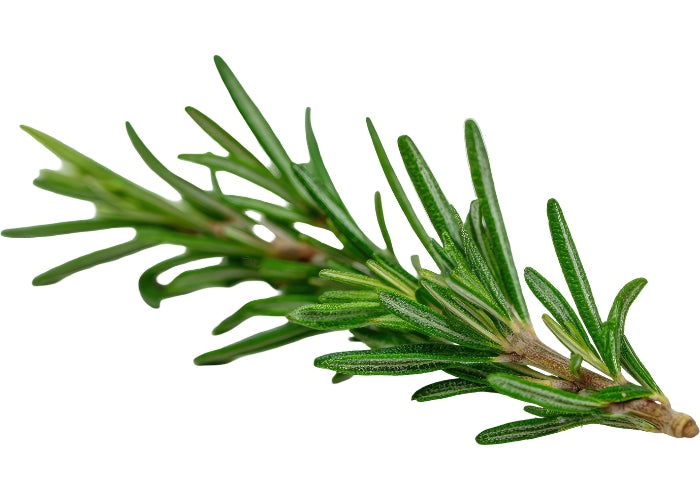
Rosemary Oleoresin
Rosemary Oleoresin
Rosemary Oleoresin (Natural Antioxidant for Oils, Balms and Creams (ROE))
Our Rosemary Oleoresin, also known as Rosemary Oil Extract or ROE, is an oil-soluble extract of rosemary leaves (INCI: Rosmarinus Officinalis Leaf Extract). Its antioxidant action comes largely from carnosic acid, and ours is standardised to about 7% carnosic acid, so it is effective at very low rates.
Makers add it to oils and oil-based products to slow rancidity and help extend shelf life. It is a thick liquid, so it is best pre-dispersed in a small portion of the oil first. It is an antioxidant, not a preservative against bacteria and mould.
|
Oil-soluble antioxidant Slows oil rancidity |
About 7% carnosic acid Standardised extract |
Use at 0.1-1% Start low |
25 ml to 100 ml Three pack sizes |
Safety information: for external (cosmetic) use only. Keep out of reach of children and keep away from the eyes. It is a dark, thick liquid that can stain. It is not a preservative. See Safety below and the Safety Data Sheet in the Product Documents section at the end of this page.
Specifications
| Specification | Detail |
|---|---|
| Product | Rosemary Oleoresin (ROE) |
| INCI (typical) | Rosmarinus Officinalis (Rosemary) Leaf Extract |
| Also known as | Rosemary Oil Extract, ROE |
| Type | Oil-soluble antioxidant extract |
| Carnosic acid | About 7% (standardised) |
| Appearance | Dark, thick liquid |
| Odour | Mild, herbaceous rosemary |
| Solubility | Oil soluble. Not water soluble |
| Typical use rate | About 0.1-1% of the oil or formula weight. Start at the low end and test |
| Suitable for | Carrier oils, balms, butters, sugar and salt scrubs, creams, lotions, soap oils |
| Not suitable for | Use as the only protection in water-based products (it is not a preservative), or internal use |
| Pack Sizes | 25 ml, 50 ml, 100 ml |
| Storage | Tightly closed, in a cool, dark place away from heat, sunlight and metals such as iron and copper |
| Use | Raw material for makers. Formulation, safety assessment and labelling of finished products are the maker's responsibility. Not for internal use |
Uses
| Use | How it is used |
|---|---|
| Carrier and infused oils | Add to fresh oil to slow rancidity and help extend its life |
| Balms and butters | Mix into melted oils and butters before they set |
| Sugar and salt scrubs | Adds shelf life to oil-based scrubs |
| Creams and lotions | Add at cool-down, with your preservative |
| Soap oils | Some makers add a little to soap oils. Test your own recipe |
| Massage and body oils | Helps protect oil blends. Test colour and scent |
How to Use Rosemary Oleoresin in Oils and Balms
- Start fresh. Use oils that are fresh, before oxidation has started. An antioxidant can slow rancidity, but it cannot reverse it.
- Weigh. Weigh the oil. A common starting point is about 0.1-0.5% rosemary oleoresin (0.1-0.5 g per 100 g of oil), up to a maximum of 1%.
- Pre-disperse. Mix the oleoresin into a small portion of the oil first, warming it slightly if needed, because it is thick and sticky.
- Combine. Add this to the rest of the oil and stir thoroughly until it is evenly mixed.
- Add to creams. In creams and lotions, add it at cool-down together with your preservative.
- Pack and store. Pour into clean, dry, dark containers and store them in a cool place.
Tip: Use a clean, dry spoon or pipette and wipe the bottle neck. The oleoresin is thick and sticky, and any spills can stain.
Using It in Your Formulas ▼
These are common maker starting points, not fixed rules. Results vary with your recipe, so always test a small batch first.
| Use | Starting amount | Notes |
|---|---|---|
| Carrier oils | About 0.1-0.5% | Pre-disperse in a little of the oil, then mix through the rest. |
| Balms and butters | About 0.1-0.5% | Add to the melted oils and mix well before pouring. |
| Sugar and salt scrubs | About 0.1-0.5% | Mix into the oil first, then into the scrub. |
| Creams and lotions | About 0.1-0.5% | Add at cool-down, together with your preservative. |
| Soap oils | As set by your recipe, up to 1% | Test for colour and scent in the finished bar. |
These are starting points for makers, not fixed rules. Results vary with your oils and recipe, so test a small batch and keep to 1% or less.
Tips & Troubleshooting ▼
| Problem | Likely cause | What to try |
|---|---|---|
| Oleoresin will not mix in | It is thick and sticky | Pre-disperse in a small amount of warm oil, then add to the rest. |
| Product has a dark tint | Natural dark colour of the extract | Use the lowest effective rate, or accept a slight tint in light products. |
| Product smells herbal | Rosemary scent | Use less, or add a little fragrance or essential oil to blend. |
| Oil still goes rancid | Oil was already oxidised, or heat, light and air exposure | Start with fresh oil, store in dark, cool conditions and keep containers closed. |
| Water-based product spoils | Rosemary oleoresin is not a preservative | Add a suitable preservative to anything that contains water. |
| Stains on skin or surfaces | Dark, sticky extract | Wipe up promptly. Keep it away from fabric and benchtops. |
Safety & Selling Your Products ▼
This product is a cosmetic raw material for external use only. Do not swallow it, keep it out of reach of children and keep it away from the eyes. Wear gloves and eye protection when handling the concentrated product, patch test finished products before first use and stop using a product if irritation occurs.
Rosemary extracts can irritate the eyes and skin in concentrated form, and some people are sensitive to rosemary. Keep it away from the eyes, wear gloves if you have sensitive skin, and patch test finished products. It is not a preservative, and products containing water still need a suitable preservative.
Selling what you make? This is a raw material for makers. The formulation, preservation, safety assessment, labelling and any regulatory requirements for your finished cosmetics or soap (including the NZ cosmetic rules) are your responsibility, and health or treatment claims should not be made for your products. Always follow the safety data for each ingredient you add. Contact us at info@purefx.co.nz if you need product information.
Frequently Asked Questions ▼
What is rosemary oleoresin?
It is an oil-soluble extract of rosemary leaves, used as a natural antioxidant to slow rancidity in oils. It is also called Rosemary Oil Extract or ROE.
What is carnosic acid?
It is the main antioxidant compound in rosemary extract. Ours is standardised to about 7%.
How much do I use?
About 0.1-1% of the oil or formula weight. Start at the low end, such as 0.1-0.5%, and test.
Is it a preservative?
No. It is an antioxidant that helps protect oils from rancidity. It does not protect against bacteria and mould, so water-based products still need a preservative.
Does it work in water-based products?
It is oil soluble. In creams and lotions, add it to the oil phase or at cool-down, and use a preservative for the water.
Will it change the colour or scent?
It is a dark extract with a mild herbaceous scent, so it can tint light products slightly at higher rates.
Can I use it with vitamin E?
Yes. Makers often use rosemary extract and vitamin E oil together as part of an antioxidant system. Test your own recipe.
How do I store it?
Tightly closed, in a cool, dark place away from heat and sunlight.
Is it for internal use?
No. We sell it as a cosmetic raw material for external use only.
Sizes & Price
| Pack | Price | Price per 100 ml |
|---|---|---|
| 25 ml | $15.00 | $60.00 |
| 50 ml | $25.00 | $50.00 |
| 100 ml | $35.00 | $35.00 |
Pairs Well With
Pair with sweet almond oil, apricot kernel oil or avocado oil, and add vitamin E oil or vegetable glycerine. Use in balms and butters with shea butter or cocoa butter, and in scrubs with our exfoliators. Preserve creams with Geogard 221 or phenoxyethanol. Browse our preservatives. |
 Product Documents
|
Couldn't load pickup availability
Rosemary Oleoresin (Natural Antioxidant for Oils, Balms and Creams (ROE))
Our Rosemary Oleoresin, also known as Rosemary Oil Extract or ROE, is an oil-soluble extract of rosemary leaves (INCI: Rosmarinus Officinalis Leaf Extract). Its antioxidant action comes largely from carnosic acid, and ours is standardised to about 7% carnosic acid, so it is effective at very low rates.
Makers add it to oils and oil-based products to slow rancidity and help extend shelf life. It is a thick liquid, so it is best pre-dispersed in a small portion of the oil first. It is an antioxidant, not a preservative against bacteria and mould.
|
Oil-soluble antioxidant Slows oil rancidity |
About 7% carnosic acid Standardised extract |
Use at 0.1-1% Start low |
25 ml to 100 ml Three pack sizes |
Safety information: for external (cosmetic) use only. Keep out of reach of children and keep away from the eyes. It is a dark, thick liquid that can stain. It is not a preservative. See Safety below and the Safety Data Sheet in the Product Documents section at the end of this page.
Specifications
| Specification | Detail |
|---|---|
| Product | Rosemary Oleoresin (ROE) |
| INCI (typical) | Rosmarinus Officinalis (Rosemary) Leaf Extract |
| Also known as | Rosemary Oil Extract, ROE |
| Type | Oil-soluble antioxidant extract |
| Carnosic acid | About 7% (standardised) |
| Appearance | Dark, thick liquid |
| Odour | Mild, herbaceous rosemary |
| Solubility | Oil soluble. Not water soluble |
| Typical use rate | About 0.1-1% of the oil or formula weight. Start at the low end and test |
| Suitable for | Carrier oils, balms, butters, sugar and salt scrubs, creams, lotions, soap oils |
| Not suitable for | Use as the only protection in water-based products (it is not a preservative), or internal use |
| Pack Sizes | 25 ml, 50 ml, 100 ml |
| Storage | Tightly closed, in a cool, dark place away from heat, sunlight and metals such as iron and copper |
| Use | Raw material for makers. Formulation, safety assessment and labelling of finished products are the maker's responsibility. Not for internal use |
Uses
| Use | How it is used |
|---|---|
| Carrier and infused oils | Add to fresh oil to slow rancidity and help extend its life |
| Balms and butters | Mix into melted oils and butters before they set |
| Sugar and salt scrubs | Adds shelf life to oil-based scrubs |
| Creams and lotions | Add at cool-down, with your preservative |
| Soap oils | Some makers add a little to soap oils. Test your own recipe |
| Massage and body oils | Helps protect oil blends. Test colour and scent |
How to Use Rosemary Oleoresin in Oils and Balms
- Start fresh. Use oils that are fresh, before oxidation has started. An antioxidant can slow rancidity, but it cannot reverse it.
- Weigh. Weigh the oil. A common starting point is about 0.1-0.5% rosemary oleoresin (0.1-0.5 g per 100 g of oil), up to a maximum of 1%.
- Pre-disperse. Mix the oleoresin into a small portion of the oil first, warming it slightly if needed, because it is thick and sticky.
- Combine. Add this to the rest of the oil and stir thoroughly until it is evenly mixed.
- Add to creams. In creams and lotions, add it at cool-down together with your preservative.
- Pack and store. Pour into clean, dry, dark containers and store them in a cool place.
Tip: Use a clean, dry spoon or pipette and wipe the bottle neck. The oleoresin is thick and sticky, and any spills can stain.
Using It in Your Formulas ▼
These are common maker starting points, not fixed rules. Results vary with your recipe, so always test a small batch first.
| Use | Starting amount | Notes |
|---|---|---|
| Carrier oils | About 0.1-0.5% | Pre-disperse in a little of the oil, then mix through the rest. |
| Balms and butters | About 0.1-0.5% | Add to the melted oils and mix well before pouring. |
| Sugar and salt scrubs | About 0.1-0.5% | Mix into the oil first, then into the scrub. |
| Creams and lotions | About 0.1-0.5% | Add at cool-down, together with your preservative. |
| Soap oils | As set by your recipe, up to 1% | Test for colour and scent in the finished bar. |
These are starting points for makers, not fixed rules. Results vary with your oils and recipe, so test a small batch and keep to 1% or less.
Tips & Troubleshooting ▼
| Problem | Likely cause | What to try |
|---|---|---|
| Oleoresin will not mix in | It is thick and sticky | Pre-disperse in a small amount of warm oil, then add to the rest. |
| Product has a dark tint | Natural dark colour of the extract | Use the lowest effective rate, or accept a slight tint in light products. |
| Product smells herbal | Rosemary scent | Use less, or add a little fragrance or essential oil to blend. |
| Oil still goes rancid | Oil was already oxidised, or heat, light and air exposure | Start with fresh oil, store in dark, cool conditions and keep containers closed. |
| Water-based product spoils | Rosemary oleoresin is not a preservative | Add a suitable preservative to anything that contains water. |
| Stains on skin or surfaces | Dark, sticky extract | Wipe up promptly. Keep it away from fabric and benchtops. |
Safety & Selling Your Products ▼
This product is a cosmetic raw material for external use only. Do not swallow it, keep it out of reach of children and keep it away from the eyes. Wear gloves and eye protection when handling the concentrated product, patch test finished products before first use and stop using a product if irritation occurs.
Rosemary extracts can irritate the eyes and skin in concentrated form, and some people are sensitive to rosemary. Keep it away from the eyes, wear gloves if you have sensitive skin, and patch test finished products. It is not a preservative, and products containing water still need a suitable preservative.
Selling what you make? This is a raw material for makers. The formulation, preservation, safety assessment, labelling and any regulatory requirements for your finished cosmetics or soap (including the NZ cosmetic rules) are your responsibility, and health or treatment claims should not be made for your products. Always follow the safety data for each ingredient you add. Contact us at info@purefx.co.nz if you need product information.
Frequently Asked Questions ▼
What is rosemary oleoresin?
It is an oil-soluble extract of rosemary leaves, used as a natural antioxidant to slow rancidity in oils. It is also called Rosemary Oil Extract or ROE.
What is carnosic acid?
It is the main antioxidant compound in rosemary extract. Ours is standardised to about 7%.
How much do I use?
About 0.1-1% of the oil or formula weight. Start at the low end, such as 0.1-0.5%, and test.
Is it a preservative?
No. It is an antioxidant that helps protect oils from rancidity. It does not protect against bacteria and mould, so water-based products still need a preservative.
Does it work in water-based products?
It is oil soluble. In creams and lotions, add it to the oil phase or at cool-down, and use a preservative for the water.
Will it change the colour or scent?
It is a dark extract with a mild herbaceous scent, so it can tint light products slightly at higher rates.
Can I use it with vitamin E?
Yes. Makers often use rosemary extract and vitamin E oil together as part of an antioxidant system. Test your own recipe.
How do I store it?
Tightly closed, in a cool, dark place away from heat and sunlight.
Is it for internal use?
No. We sell it as a cosmetic raw material for external use only.
Sizes & Price
| Pack | Price | Price per 100 ml |
|---|---|---|
| 25 ml | $15.00 | $60.00 |
| 50 ml | $25.00 | $50.00 |
| 100 ml | $35.00 | $35.00 |
Pairs Well With
Pair with sweet almond oil, apricot kernel oil or avocado oil, and add vitamin E oil or vegetable glycerine. Use in balms and butters with shea butter or cocoa butter, and in scrubs with our exfoliators. Preserve creams with Geogard 221 or phenoxyethanol. Browse our preservatives. |
|
Product Documents
|