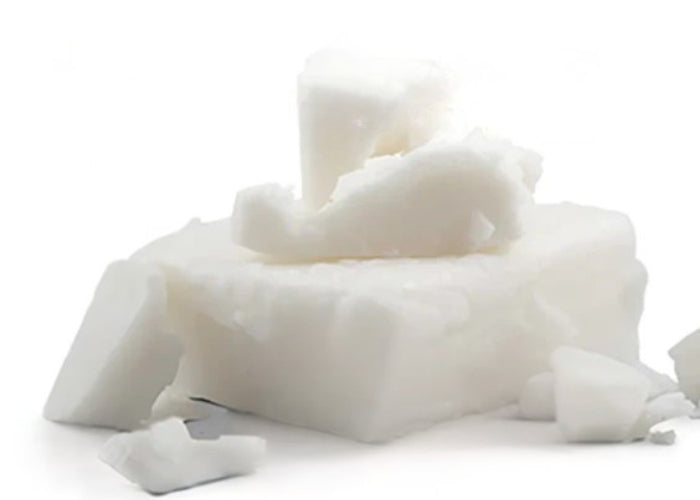
Coconut Candle Wax
Coconut Candle Wax
Coconut Candle Wax (Soft Coconut Wax for Blending into Container Candles)
Coconut Candle Wax is a soft, white wax made from coconut oil. Candle makers blend it with soy and other waxes to give container candles a creamy, smooth finish. It melts at only 38-42 °C, much lower than soy wax, so it is best used as part of a blend rather than on its own.
Our Coconut Candle Wax is made from 98% coconut oil with 2% edible emulsifier, and we supply it from our base in Kaiapoi, Christchurch, in sizes from 1 kg up to 20 kg. Every order is backed by a Specifications sheet, Safety Data Sheet, Ingredient Statement and Candle Making Quick Guide, all linked in the Product Documents section below.
|
Coconut oil wax Soft blending wax |
Melts at 38-42 °C Low melt point |
Blend 10-50% With other waxes |
White and odourless Easy to colour |
Safety information: for full hazard, handling and safety information, please see the Safety Data Sheet in the Product Documents section below.
Specifications
| Specification | Detail |
|---|---|
| Product | Coconut Candle Wax |
| Type | Soft coconut oil wax for blending into container candles |
| Composition | Coconut oil 98%, edible emulsifier 2%. Coconut oil CAS 84836-98-6 |
| Appearance | White, paste-like wax, odourless |
| Melt Point | 38-42 °C (100-108 °F) |
| Quality Specification (limits) | Peroxide value 0.1 g/100 g or less. Acid value 1.0 or less. Moisture and volatile matter 1.0% or less. Lead 1.0 mg/kg or less |
| Suggested Blend | 10% to 50% of the total wax weight, often starting at 10%. Starting points only. Always test |
| Melting and Fragrance Step | Melt with your main wax to about 80 °C (176 °F), take off the heat, add fragrance and stir gently for about 2 minutes |
| Recommended Fragrance Load | Up to 10% of total wax weight. Many makers start lower. Always test |
| Pour Temperature | Follow your main wax. About 55-60 °C (131-140 °F) is a typical starting point for a blend |
| Best Suited For | Blending into container candles. Too soft on its own for wax melts or pillar candles |
| Wick Guidance | ECO or CDN wicks, sized to the container and the main wax. Always test (see the wick guide below) |
| Pack Sizes | 1 kg, 2 kg, 5 kg, 10 kg, 20 kg |
| Storage | Cool, dry place, sealed, away from heat and sunlight. The wax softens from about 38 °C |
| Shelf Life | Not specified |
| Use | Candle making only. Not for food, cosmetic or topical use |
How to Make a Coconut Wax Blend Container Candle
- Get set up. Have clean, dry containers at room temperature, a wick on a wick tab, a wick holder or sticker to keep it centred, scales and a thermometer ready.
- Weigh. Weigh your main wax and the coconut wax (10% coconut wax is a common starting point). Then weigh fragrance oil at up to 10% of the total wax weight.
- Melt. Melt both waxes together in a double boiler or other controlled heat to about 80 °C. Add candle dye now if you are using it and stir until dissolved. Never heat wax directly over a flame or leave it unattended.
- Add fragrance. Take the wax off the heat, add the fragrance and stir gently for about 2 minutes.
- Cool to pouring temperature. Let the blend cool to the pouring temperature of your main wax. About 55-60 °C is a typical starting point.
- Pour. Pour slowly into the containers and leave them undisturbed at room temperature, away from draughts.
- Let it set. Leave the candles uncovered for at least 24 hours. If the top looks uneven, it can be smoothed by re-melting it with a heat gun.
- Trim and cure. Trim the wick to about 5 mm. Follow the cure time of your main wax, usually 48 hours before a test burn and 1 to 2 weeks for the best scent throw.
Tip: always make a small test candle first. Every combination of wax blend, container, wick, fragrance and dye burns a little differently.
What Is Coconut Candle Wax? ▼
Coconut candle wax is made from 98% coconut oil with 2% edible emulsifier. It is a white, odourless, paste-like wax that melts at 38-42 °C.
That is a much lower melt point than soy wax, so the wax is soft and creamy. Candle makers use it as part of a blend, adding it to a firmer wax to soften the texture and improve the look of the finished candle. Each batch is tested for peroxide value, acid value, moisture and lead, and the limits are listed in the specifications above.
Good to know: a soft wax can sweat or soften in warm weather, in a hot car or during transport. Blend in moderation, store finished candles somewhere cool, and test the blend before you sell it.
Choosing the Right Wax ▼
| Candle type | Wax to use | Notes |
|---|---|---|
| Container candle blends | Coconut Candle Wax (this wax) blended with Golden Brands 464, Natural Soy Wax Flakes 50°C or Coco Soy Blended Wax | A soft, creamy wax to blend in at 10% or more. Test the blend. |
| Wax melts | Natural Soy Wax Flakes 50°C or Soy Wax (Pillar Blend) 58° | Coconut wax is too soft on its own for melts. Pour into silicone moulds or clamshell packs. |
| Pillars and free-standing candles | Soy Wax (Pillar Blend) 58° | A higher melt point wax suited to holding its own shape. |
| Clear gel candles | Jelly Candle Wax (Gel) | A different wax for a different look. |
| Other waxes to compare | Browse all candle waxes | Including beeswax, paraffin and palm waxes. |
Uses & Project Ideas ▼
Container candle blends
Add coconut wax to soy wax to soften the texture and give a creamy finish. Pair it with our candle jars and glassware for scented candles to keep, gift or sell.
Soft-finish candles
Higher coconut proportions give a softer candle. Keep these in a cool place, as they can soften in warm weather.
Tins and travel candles
Small tins suit lower-volume batches and make easy gifts and favours.
Gifts, markets and workshops
An easy way to make personalised candles for weddings, birthdays, markets or craft sessions.
Blending Ideas ▼
Coconut wax is normally blended with a firmer wax. These are starting points only and have not been tested by PureFX, so test a small batch first.
| Coconut wax | Main wax | Notes |
|---|---|---|
| 10% | Golden Brands 464 or Natural Soy Wax Flakes 50°C 90% | A common starting point. Test before going higher. |
| 20-30% | Soy wax 70-80% | A softer, creamier candle. Check how it holds in warm weather. |
| Up to 50% | Soy wax 50% | The upper end of what many makers use. Expect a soft candle and keep it cool. |
Blend ratios change the melt point, pour temperature and wicking, so always burn test a blend before selling candles made with it.
Fragrance, Colour & Additive Guide ▼
These are starting points, not fixed rules. Always test a small batch, and follow the safety information for each fragrance oil and dye you use.
| Add-in | Starting point | Notes |
|---|---|---|
| Fragrance oil | Up to 10% of total wax weight | Use fragrance oil made for candles. Many makers start lower and work up. Add it off the heat and stir for about 2 minutes. |
| Liquid candle dye | A few drops at a time | Add to the melted wax and stir until dissolved. The wax is white, so colours show well. Wax looks darker when liquid than when set. Browse our liquid candle dyes. |
| Dye chips | Follow the chip supplier's guidance | Add to the melted wax and stir until fully dissolved. Browse our candle dye chips. |
| Other additives | Test first | Anything not made for candles can affect the burn, so test a small candle before using it. |
Wick Guide ▼
Wick size is the most important choice in a candle. These are starting points only, as the right wick depends on your container, your wax blend, fragrance and dye. Start with the wick suggested for your main wax, then burn test and adjust one size at a time.
| Wick | Where to start | Notes |
|---|---|---|
| ECO wicks | Match the wick to the container diameter: 45-70 mm, 75-90 mm or 90-105 mm | Choose by the width of the container, then test. |
| CDN wicks (CDN-7 to CDN-28) | Smaller numbers for smaller containers, larger numbers for wider ones | Test one size either side. Go up a size if the flame is small or the candle tunnels. Go down if the flame is large, smoky or mushrooming. |
| Wick tabs | One on every wick | Holds the wick upright and fixed to the base of the container. |
| Wick holders and wick stickers | One per wick | Keeps the wick centred while the wax sets. A centred wick burns evenly. |
| Wick trimmer | Before every burn | Trim to about 5 mm for a steady flame. |
Troubleshooting ▼
| Problem | Likely cause | What to try |
|---|---|---|
| Candle feels soft or marks easily | Coconut wax proportion is high | Use a smaller proportion of coconut wax and store the candles somewhere cool. |
| Softening or sweating in warm weather | Low melt point of 38-42 °C | Reduce the coconut proportion, keep candles out of hot cars and direct sun. |
| Frosted or mottled top | Cooling too fast, cold glass or a cool room | Warm the room, use room-temperature containers, avoid draughts and rapid cooling. The top can be re-melted with a heat gun. |
| Sinkholes or cavities | Wax shrinks as it sets | Re-melt the top with a heat gun or add a small second pour. |
| Weak scent throw | Fragrance added too hot, or not enough cure time | Add fragrance off the heat, stir for 2 minutes and cure for 1 to 2 weeks. |
| Tunnelling or small flame | Wick too small for the container | Try the next wick size up. |
| Large flame, soot or mushrooming | Wick too large or fragrance load too high | Try the next wick size down and trim to 5 mm. |
Sizes & Price per kg
| Size | Price | Price per kg |
|---|---|---|
| 1 kg | $22.00 | $22.00 |
| 2 kg | $42.00 | $21.00 |
| 5 kg | $89.00 | $17.80 |
| 10 kg | $170.00 | $17.00 |
| 20 kg | $290.00 | $14.50 |
Burn Safety & Selling Your Candles ▼
Never leave a burning candle unattended. Keep candles away from children, pets, draughts and anything flammable, and burn on a heat-resistant surface. Trim the wick to about 5 mm before each burn and stop burning when about 1 cm of wax is left.
Molten wax and the containers it is heated in can burn. Keep melting wax away from children and pets, and never heat it over a direct flame. Have a lid or damp cloth nearby for emergencies.
Selling your candles? Your labels should include safe-burning warnings and any hazard or allergen information required for the fragrance oil you use. Use the Ingredient Statement and Safety Data Sheet below together with the safety data for everything you add.
Frequently Asked Questions ▼
Is it suitable for container candles?
Yes, as part of a blend. Mix it with a firmer wax such as Golden Brands 464 or Natural Soy Wax Flakes 50°C. See the Blending Ideas above.
Can I use it on its own?
We recommend blending. With a melt point of 38-42 °C the wax is very soft, and a candle made from it alone can soften in warm weather and may not hold its shape or grip the glass well. If you want to try it on its own, make a small test candle first.
Can I make wax melts with it?
On its own, we do not recommend it. Melts made from such a soft wax can soften in warm weather or in transit. For melts, see Natural Soy Wax Flakes 50°C or Soy Wax (Pillar Blend) 58°.
What is the melting point?
38-42 °C.
How much fragrance can I add?
Up to 10% of the total wax weight. Many makers start lower. Always test your own fragrance.
What temperature should I pour at?
Follow your main wax. About 55-60 °C is a typical starting point for a blend. Melt to about 80 °C first, add fragrance off the heat and then let it cool to pouring temperature.
Which wick should I use?
It depends on your container and your blend. See the Wick Guide above for ECO and CDN wick starting points, and always burn test.
Can I use it in cosmetics or skin products?
We sell this wax for candle making. It is not sold as a cosmetic-grade product, so please ask us before using it on the skin.
Does it contain soy?
No. It is made from coconut oil and an edible emulsifier. Ask us if you need more detail on the emulsifier.
Is it vegan, palm free or non-GMO?
We don't currently make vegan, palm-free or non-GMO claims for this wax. Ask us if you need one of these confirmed.
How should I store it?
Keep it sealed in a cool, dry place away from heat and sunlight. The wax starts to soften from about 38 °C.
Where is it made?
Ask us if you need origin information.
Pairs Well With
Blend this wax with Golden Brands 464, Natural Soy Wax Flakes 50°C or Coco Soy Blended Wax. Add fragrance oils for scent and choose a wick from our candle wicks (ECO and CDN), secured with wick tabs, wick holders or wick stickers. Browse our candle jars and glassware, add colour with liquid candle dyes or dye chips, and finish with a wick trimmer. See all candle making accessories. |

Product Documents
|
Couldn't load pickup availability
Coconut Candle Wax (Soft Coconut Wax for Blending into Container Candles)
Coconut Candle Wax is a soft, white wax made from coconut oil. Candle makers blend it with soy and other waxes to give container candles a creamy, smooth finish. It melts at only 38-42 °C, much lower than soy wax, so it is best used as part of a blend rather than on its own.
Our Coconut Candle Wax is made from 98% coconut oil with 2% edible emulsifier, and we supply it from our base in Kaiapoi, Christchurch, in sizes from 1 kg up to 20 kg. Every order is backed by a Specifications sheet, Safety Data Sheet, Ingredient Statement and Candle Making Quick Guide, all linked in the Product Documents section below.
|
Coconut oil wax Soft blending wax |
Melts at 38-42 °C Low melt point |
Blend 10-50% With other waxes |
White and odourless Easy to colour |
Safety information: for full hazard, handling and safety information, please see the Safety Data Sheet in the Product Documents section below.
Specifications
| Specification | Detail |
|---|---|
| Product | Coconut Candle Wax |
| Type | Soft coconut oil wax for blending into container candles |
| Composition | Coconut oil 98%, edible emulsifier 2%. Coconut oil CAS 84836-98-6 |
| Appearance | White, paste-like wax, odourless |
| Melt Point | 38-42 °C (100-108 °F) |
| Quality Specification (limits) | Peroxide value 0.1 g/100 g or less. Acid value 1.0 or less. Moisture and volatile matter 1.0% or less. Lead 1.0 mg/kg or less |
| Suggested Blend | 10% to 50% of the total wax weight, often starting at 10%. Starting points only. Always test |
| Melting and Fragrance Step | Melt with your main wax to about 80 °C (176 °F), take off the heat, add fragrance and stir gently for about 2 minutes |
| Recommended Fragrance Load | Up to 10% of total wax weight. Many makers start lower. Always test |
| Pour Temperature | Follow your main wax. About 55-60 °C (131-140 °F) is a typical starting point for a blend |
| Best Suited For | Blending into container candles. Too soft on its own for wax melts or pillar candles |
| Wick Guidance | ECO or CDN wicks, sized to the container and the main wax. Always test (see the wick guide below) |
| Pack Sizes | 1 kg, 2 kg, 5 kg, 10 kg, 20 kg |
| Storage | Cool, dry place, sealed, away from heat and sunlight. The wax softens from about 38 °C |
| Shelf Life | Not specified |
| Use | Candle making only. Not for food, cosmetic or topical use |
How to Make a Coconut Wax Blend Container Candle
- Get set up. Have clean, dry containers at room temperature, a wick on a wick tab, a wick holder or sticker to keep it centred, scales and a thermometer ready.
- Weigh. Weigh your main wax and the coconut wax (10% coconut wax is a common starting point). Then weigh fragrance oil at up to 10% of the total wax weight.
- Melt. Melt both waxes together in a double boiler or other controlled heat to about 80 °C. Add candle dye now if you are using it and stir until dissolved. Never heat wax directly over a flame or leave it unattended.
- Add fragrance. Take the wax off the heat, add the fragrance and stir gently for about 2 minutes.
- Cool to pouring temperature. Let the blend cool to the pouring temperature of your main wax. About 55-60 °C is a typical starting point.
- Pour. Pour slowly into the containers and leave them undisturbed at room temperature, away from draughts.
- Let it set. Leave the candles uncovered for at least 24 hours. If the top looks uneven, it can be smoothed by re-melting it with a heat gun.
- Trim and cure. Trim the wick to about 5 mm. Follow the cure time of your main wax, usually 48 hours before a test burn and 1 to 2 weeks for the best scent throw.
Tip: always make a small test candle first. Every combination of wax blend, container, wick, fragrance and dye burns a little differently.
What Is Coconut Candle Wax? ▼
Coconut candle wax is made from 98% coconut oil with 2% edible emulsifier. It is a white, odourless, paste-like wax that melts at 38-42 °C.
That is a much lower melt point than soy wax, so the wax is soft and creamy. Candle makers use it as part of a blend, adding it to a firmer wax to soften the texture and improve the look of the finished candle. Each batch is tested for peroxide value, acid value, moisture and lead, and the limits are listed in the specifications above.
Good to know: a soft wax can sweat or soften in warm weather, in a hot car or during transport. Blend in moderation, store finished candles somewhere cool, and test the blend before you sell it.
Choosing the Right Wax ▼
| Candle type | Wax to use | Notes |
|---|---|---|
| Container candle blends | Coconut Candle Wax (this wax) blended with Golden Brands 464, Natural Soy Wax Flakes 50°C or Coco Soy Blended Wax | A soft, creamy wax to blend in at 10% or more. Test the blend. |
| Wax melts | Natural Soy Wax Flakes 50°C or Soy Wax (Pillar Blend) 58° | Coconut wax is too soft on its own for melts. Pour into silicone moulds or clamshell packs. |
| Pillars and free-standing candles | Soy Wax (Pillar Blend) 58° | A higher melt point wax suited to holding its own shape. |
| Clear gel candles | Jelly Candle Wax (Gel) | A different wax for a different look. |
| Other waxes to compare | Browse all candle waxes | Including beeswax, paraffin and palm waxes. |
Uses & Project Ideas ▼
Container candle blends
Add coconut wax to soy wax to soften the texture and give a creamy finish. Pair it with our candle jars and glassware for scented candles to keep, gift or sell.
Soft-finish candles
Higher coconut proportions give a softer candle. Keep these in a cool place, as they can soften in warm weather.
Tins and travel candles
Small tins suit lower-volume batches and make easy gifts and favours.
Gifts, markets and workshops
An easy way to make personalised candles for weddings, birthdays, markets or craft sessions.
Blending Ideas ▼
Coconut wax is normally blended with a firmer wax. These are starting points only and have not been tested by PureFX, so test a small batch first.
| Coconut wax | Main wax | Notes |
|---|---|---|
| 10% | Golden Brands 464 or Natural Soy Wax Flakes 50°C 90% | A common starting point. Test before going higher. |
| 20-30% | Soy wax 70-80% | A softer, creamier candle. Check how it holds in warm weather. |
| Up to 50% | Soy wax 50% | The upper end of what many makers use. Expect a soft candle and keep it cool. |
Blend ratios change the melt point, pour temperature and wicking, so always burn test a blend before selling candles made with it.
Fragrance, Colour & Additive Guide ▼
These are starting points, not fixed rules. Always test a small batch, and follow the safety information for each fragrance oil and dye you use.
| Add-in | Starting point | Notes |
|---|---|---|
| Fragrance oil | Up to 10% of total wax weight | Use fragrance oil made for candles. Many makers start lower and work up. Add it off the heat and stir for about 2 minutes. |
| Liquid candle dye | A few drops at a time | Add to the melted wax and stir until dissolved. The wax is white, so colours show well. Wax looks darker when liquid than when set. Browse our liquid candle dyes. |
| Dye chips | Follow the chip supplier's guidance | Add to the melted wax and stir until fully dissolved. Browse our candle dye chips. |
| Other additives | Test first | Anything not made for candles can affect the burn, so test a small candle before using it. |
Wick Guide ▼
Wick size is the most important choice in a candle. These are starting points only, as the right wick depends on your container, your wax blend, fragrance and dye. Start with the wick suggested for your main wax, then burn test and adjust one size at a time.
| Wick | Where to start | Notes |
|---|---|---|
| ECO wicks | Match the wick to the container diameter: 45-70 mm, 75-90 mm or 90-105 mm | Choose by the width of the container, then test. |
| CDN wicks (CDN-7 to CDN-28) | Smaller numbers for smaller containers, larger numbers for wider ones | Test one size either side. Go up a size if the flame is small or the candle tunnels. Go down if the flame is large, smoky or mushrooming. |
| Wick tabs | One on every wick | Holds the wick upright and fixed to the base of the container. |
| Wick holders and wick stickers | One per wick | Keeps the wick centred while the wax sets. A centred wick burns evenly. |
| Wick trimmer | Before every burn | Trim to about 5 mm for a steady flame. |
Troubleshooting ▼
| Problem | Likely cause | What to try |
|---|---|---|
| Candle feels soft or marks easily | Coconut wax proportion is high | Use a smaller proportion of coconut wax and store the candles somewhere cool. |
| Softening or sweating in warm weather | Low melt point of 38-42 °C | Reduce the coconut proportion, keep candles out of hot cars and direct sun. |
| Frosted or mottled top | Cooling too fast, cold glass or a cool room | Warm the room, use room-temperature containers, avoid draughts and rapid cooling. The top can be re-melted with a heat gun. |
| Sinkholes or cavities | Wax shrinks as it sets | Re-melt the top with a heat gun or add a small second pour. |
| Weak scent throw | Fragrance added too hot, or not enough cure time | Add fragrance off the heat, stir for 2 minutes and cure for 1 to 2 weeks. |
| Tunnelling or small flame | Wick too small for the container | Try the next wick size up. |
| Large flame, soot or mushrooming | Wick too large or fragrance load too high | Try the next wick size down and trim to 5 mm. |
Sizes & Price per kg
| Size | Price | Price per kg |
|---|---|---|
| 1 kg | $22.00 | $22.00 |
| 2 kg | $42.00 | $21.00 |
| 5 kg | $89.00 | $17.80 |
| 10 kg | $170.00 | $17.00 |
| 20 kg | $290.00 | $14.50 |
Burn Safety & Selling Your Candles ▼
Never leave a burning candle unattended. Keep candles away from children, pets, draughts and anything flammable, and burn on a heat-resistant surface. Trim the wick to about 5 mm before each burn and stop burning when about 1 cm of wax is left.
Molten wax and the containers it is heated in can burn. Keep melting wax away from children and pets, and never heat it over a direct flame. Have a lid or damp cloth nearby for emergencies.
Selling your candles? Your labels should include safe-burning warnings and any hazard or allergen information required for the fragrance oil you use. Use the Ingredient Statement and Safety Data Sheet below together with the safety data for everything you add.
Frequently Asked Questions ▼
Is it suitable for container candles?
Yes, as part of a blend. Mix it with a firmer wax such as Golden Brands 464 or Natural Soy Wax Flakes 50°C. See the Blending Ideas above.
Can I use it on its own?
We recommend blending. With a melt point of 38-42 °C the wax is very soft, and a candle made from it alone can soften in warm weather and may not hold its shape or grip the glass well. If you want to try it on its own, make a small test candle first.
Can I make wax melts with it?
On its own, we do not recommend it. Melts made from such a soft wax can soften in warm weather or in transit. For melts, see Natural Soy Wax Flakes 50°C or Soy Wax (Pillar Blend) 58°.
What is the melting point?
38-42 °C.
How much fragrance can I add?
Up to 10% of the total wax weight. Many makers start lower. Always test your own fragrance.
What temperature should I pour at?
Follow your main wax. About 55-60 °C is a typical starting point for a blend. Melt to about 80 °C first, add fragrance off the heat and then let it cool to pouring temperature.
Which wick should I use?
It depends on your container and your blend. See the Wick Guide above for ECO and CDN wick starting points, and always burn test.
Can I use it in cosmetics or skin products?
We sell this wax for candle making. It is not sold as a cosmetic-grade product, so please ask us before using it on the skin.
Does it contain soy?
No. It is made from coconut oil and an edible emulsifier. Ask us if you need more detail on the emulsifier.
Is it vegan, palm free or non-GMO?
We don't currently make vegan, palm-free or non-GMO claims for this wax. Ask us if you need one of these confirmed.
How should I store it?
Keep it sealed in a cool, dry place away from heat and sunlight. The wax starts to soften from about 38 °C.
Where is it made?
Ask us if you need origin information.
Pairs Well With
Blend this wax with Golden Brands 464, Natural Soy Wax Flakes 50°C or Coco Soy Blended Wax. Add fragrance oils for scent and choose a wick from our candle wicks (ECO and CDN), secured with wick tabs, wick holders or wick stickers. Browse our candle jars and glassware, add colour with liquid candle dyes or dye chips, and finish with a wick trimmer. See all candle making accessories. |
|
Product Documents
|