Activated Charcoal Powder
Activated Charcoal Powder
Activated Charcoal Powder (Coconut Shell Charcoal)
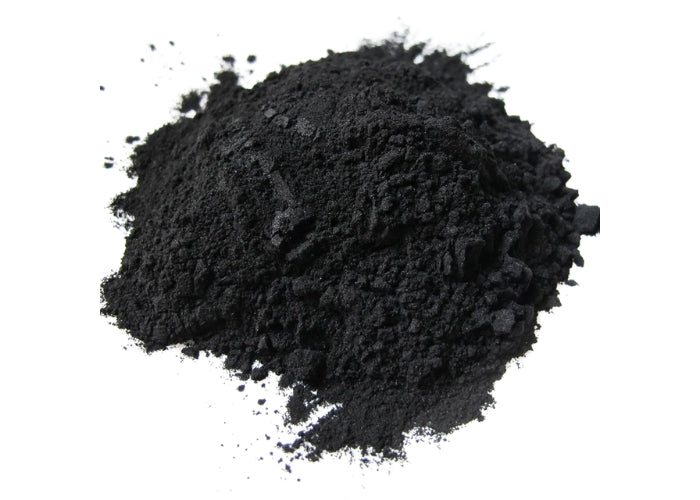
Our Activated Charcoal is a fine, jet-black powder made from coconut shell charcoal sourced from Indonesia. It gives soap, masks and scrubs a deep black or grey colour that is hard to match with other natural ingredients.
Activated charcoal is a porous carbon that is popular in cosmetic making for charcoal soap bars, clarifying face masks and scrubs for oily or congested skin, and it is also used in some DIY tooth powders.
|
Coconut shell charcoal Fine, jet-black powder |
Soap, masks, scrubs Deep black to grey |
Porous activated carbon Popular for clarifying masks |
100 g to 1 kg Four pack sizes |
Safety information: for external (cosmetic) use only. Keep out of reach of children, keep away from the eyes, patch test before first use and avoid breathing in the dust. See Safety below and the Safety Data Sheet in the Product Documents section at the end of this page.
Specifications
| Specification | Detail |
|---|---|
| Product | Activated Charcoal Powder |
| INCI (typical) | Charcoal Powder |
| Source material | Coconut shell charcoal |
| Origin | Indonesia |
| Appearance | Fine, jet-black powder |
| Suitable for | Charcoal soap, face masks, scrubs, bath blends, foot soaks, DIY tooth powders (see Safety) |
| Colour in soap | Grey to black, depending on amount. Can lather grey |
| Staining | Stains fabric, grout and sinks. Clean spills quickly |
| Not suitable for | Internal use. Do not use on broken skin |
| Pack Sizes | 100 g, 200 g, 500 g, 1 kg |
| Storage | Sealed, cool and dry, away from moisture and direct sunlight |
| Use | Raw material for makers. Formulation, safety assessment and labelling of finished products are the maker's responsibility |
Uses
| Use | How it is used |
|---|---|
| Charcoal soap | Gives a grey to black colour in cold process and melt and pour soap. Mix with a little oil or glycerine first |
| Face masks | Mix with clay and water for a clarifying mask for oily or congested skin |
| Scrubs | Add to salt or sugar scrubs for black colour |
| Bath blends and foot soaks | Mix into bath salts and soaks (rinse the tub well) |
| DIY tooth powder | Some makers add a little to tooth powders. See the note in the Safety section |
| Colour for natural recipes | A black colourant for cosmetic recipes |
How to Add Activated Charcoal to Soap
- Measure. Wear a dust mask and weigh the charcoal. It is very light and dusty, so work gently.
- Make a paste. Mix the charcoal with a little oil (cold process) or vegetable glycerine (melt and pour) until it is a smooth, lump-free paste.
- Stir it in. Stir the paste into your soap at light trace, or into the melted base, until the colour is even.
- Check the colour. Grey appears with small amounts. Add more a little at a time for black, testing as you go.
- Pour. Pour, mould and cure as usual. Clean spills straight away as charcoal stains.
Tip: Open the container outdoors or over a sheet of paper, wear old clothes and clean up spills straight away.
Using It in Soap, Masks & Scrubs ▼
These are common maker starting points, not fixed rules. Results vary with your recipe, so always test a small batch first.
| Use | Starting amount | Notes |
|---|---|---|
| Cold process soap | About 1 tsp per 500 g of soap oils for a grey tone, up to about 1 tbsp for a darker colour | Mix with a little oil first and add at light trace. Test the colour on a small batch. |
| Melt and pour soap | About 1/4-1/2 tsp per 500 g of base | Mix with a little glycerine first. Too much can leave a grey lather and stain skin. |
| Face mask | 1 tsp charcoal + 1 tbsp clay + water to a paste | Apply a thin layer, avoid the eyes, and rinse before it dries completely. |
| Scrubs | 1-2 tsp per cup of scrub base | Mix through evenly. Rinse the sink after use. |
| Bath blends | 1-2 tsp per bath | Use a mesh bag and rinse the tub well. |
Charcoal is very strong. Start small and increase.
Tips & Troubleshooting ▼
| Problem | Likely cause | What to try |
|---|---|---|
| Dust everywhere | Very light, fine powder | Open and measure gently, ideally outdoors or in a draught-free spot. Wear a dust mask and old clothes. |
| Streaks or lumps in soap | Charcoal not fully mixed in | Make a smooth paste with oil or glycerine first, then stick-blend or stir well. |
| Grey lather | Common with charcoal soaps | Use less charcoal, or choose a darker colour only where you need it. |
| Stains sinks, tubs or grout | Charcoal stains | Wipe up straight away with a damp cloth. Rinse bath blends out well. |
| Soap turns grey rather than black | Not enough charcoal, or fading | Increase the amount gradually and test. Colour is darker in a finished bar than in a fresh batch. |
| Blocked drain | Charcoal settling in pipes | Wipe off with a cloth, use a strainer and run plenty of water. |
Safety & Selling Your Products ▼
This product is a cosmetic raw material for external use only. Do not swallow it, keep it out of reach of children, keep it away from the eyes and do not use it on broken or irritated skin. Fine powders can irritate the airways, so wear a dust mask when weighing or pouring and avoid creating dust clouds. Do a patch test before first use and stop using it if irritation occurs.
Activated charcoal can bind to other substances. It is sold here for external cosmetic use only, and we do not recommend swallowing it. Some makers add a little to tooth powders. Charcoal is abrasive and the benefits are not established, so check with your dentist before using it on your teeth. Keep dust away from the eyes and airways.
Selling what you make? This is a raw material for makers. The formulation, preservation, safety assessment, labelling and any regulatory requirements for your finished cosmetics or soap (including the NZ cosmetic rules) are your responsibility, and health or treatment claims should not be made for your products. Contact us at info@purefx.co.nz if you need product information.
Frequently Asked Questions ▼
What is it made from?
Activated carbon from coconut shell charcoal, sourced from Indonesia.
How much do I use in soap?
About 1 teaspoon per 500 g of soap oils gives grey. Use up to about 1 tablespoon for darker colour. See the table above.
Will it stain?
Yes. Charcoal stains fabric, grout and sinks, so clean spills straight away.
Is it good for oily skin?
Activated charcoal is popular in clarifying masks for oily and congested skin. Patch test first, as skin responses differ.
Can I use it on my teeth?
Some makers add it to tooth powders. It is abrasive and its benefits are not established, so check with your dentist.
Can I eat it or use it internally?
No. It is sold for external cosmetic use only.
Sizes & Price
| Pack | Price | Price per 100 g |
|---|---|---|
| 100 g | $8.50 | $8.50 |
| 200 g | $15.00 | $7.50 |
| 500 g | $28.00 | $5.60 |
| 1 kg | $54.00 | $5.40 |
Pairs Well With
Pair with bentonite clay, kaolin clay or Dead Sea mud, and add tea tree essential oil or peppermint essential oil. For soap, use with a white SLS-free melt and pour base or clear SLS-free melt and pour base, and brighten with titanium dioxide. Mix a mask with hydrosol. Browse all clays and cosmetic powders. |
 Product Documents
|
Couldn't load pickup availability
Activated Charcoal Powder (Coconut Shell Charcoal)
Our Activated Charcoal is a fine, jet-black powder made from coconut shell charcoal sourced from Indonesia. It gives soap, masks and scrubs a deep black or grey colour that is hard to match with other natural ingredients.
Activated charcoal is a porous carbon that is popular in cosmetic making for charcoal soap bars, clarifying face masks and scrubs for oily or congested skin, and it is also used in some DIY tooth powders.
|
Coconut shell charcoal Fine, jet-black powder |
Soap, masks, scrubs Deep black to grey |
Porous activated carbon Popular for clarifying masks |
100 g to 1 kg Four pack sizes |
Safety information: for external (cosmetic) use only. Keep out of reach of children, keep away from the eyes, patch test before first use and avoid breathing in the dust. See Safety below and the Safety Data Sheet in the Product Documents section at the end of this page.
Specifications
| Specification | Detail |
|---|---|
| Product | Activated Charcoal Powder |
| INCI (typical) | Charcoal Powder |
| Source material | Coconut shell charcoal |
| Origin | Indonesia |
| Appearance | Fine, jet-black powder |
| Suitable for | Charcoal soap, face masks, scrubs, bath blends, foot soaks, DIY tooth powders (see Safety) |
| Colour in soap | Grey to black, depending on amount. Can lather grey |
| Staining | Stains fabric, grout and sinks. Clean spills quickly |
| Not suitable for | Internal use. Do not use on broken skin |
| Pack Sizes | 100 g, 200 g, 500 g, 1 kg |
| Storage | Sealed, cool and dry, away from moisture and direct sunlight |
| Use | Raw material for makers. Formulation, safety assessment and labelling of finished products are the maker's responsibility |
Uses
| Use | How it is used |
|---|---|
| Charcoal soap | Gives a grey to black colour in cold process and melt and pour soap. Mix with a little oil or glycerine first |
| Face masks | Mix with clay and water for a clarifying mask for oily or congested skin |
| Scrubs | Add to salt or sugar scrubs for black colour |
| Bath blends and foot soaks | Mix into bath salts and soaks (rinse the tub well) |
| DIY tooth powder | Some makers add a little to tooth powders. See the note in the Safety section |
| Colour for natural recipes | A black colourant for cosmetic recipes |
How to Add Activated Charcoal to Soap
- Measure. Wear a dust mask and weigh the charcoal. It is very light and dusty, so work gently.
- Make a paste. Mix the charcoal with a little oil (cold process) or vegetable glycerine (melt and pour) until it is a smooth, lump-free paste.
- Stir it in. Stir the paste into your soap at light trace, or into the melted base, until the colour is even.
- Check the colour. Grey appears with small amounts. Add more a little at a time for black, testing as you go.
- Pour. Pour, mould and cure as usual. Clean spills straight away as charcoal stains.
Tip: Open the container outdoors or over a sheet of paper, wear old clothes and clean up spills straight away.
Using It in Soap, Masks & Scrubs ▼
These are common maker starting points, not fixed rules. Results vary with your recipe, so always test a small batch first.
| Use | Starting amount | Notes |
|---|---|---|
| Cold process soap | About 1 tsp per 500 g of soap oils for a grey tone, up to about 1 tbsp for a darker colour | Mix with a little oil first and add at light trace. Test the colour on a small batch. |
| Melt and pour soap | About 1/4-1/2 tsp per 500 g of base | Mix with a little glycerine first. Too much can leave a grey lather and stain skin. |
| Face mask | 1 tsp charcoal + 1 tbsp clay + water to a paste | Apply a thin layer, avoid the eyes, and rinse before it dries completely. |
| Scrubs | 1-2 tsp per cup of scrub base | Mix through evenly. Rinse the sink after use. |
| Bath blends | 1-2 tsp per bath | Use a mesh bag and rinse the tub well. |
Charcoal is very strong. Start small and increase.
Tips & Troubleshooting ▼
| Problem | Likely cause | What to try |
|---|---|---|
| Dust everywhere | Very light, fine powder | Open and measure gently, ideally outdoors or in a draught-free spot. Wear a dust mask and old clothes. |
| Streaks or lumps in soap | Charcoal not fully mixed in | Make a smooth paste with oil or glycerine first, then stick-blend or stir well. |
| Grey lather | Common with charcoal soaps | Use less charcoal, or choose a darker colour only where you need it. |
| Stains sinks, tubs or grout | Charcoal stains | Wipe up straight away with a damp cloth. Rinse bath blends out well. |
| Soap turns grey rather than black | Not enough charcoal, or fading | Increase the amount gradually and test. Colour is darker in a finished bar than in a fresh batch. |
| Blocked drain | Charcoal settling in pipes | Wipe off with a cloth, use a strainer and run plenty of water. |
Safety & Selling Your Products ▼
This product is a cosmetic raw material for external use only. Do not swallow it, keep it out of reach of children, keep it away from the eyes and do not use it on broken or irritated skin. Fine powders can irritate the airways, so wear a dust mask when weighing or pouring and avoid creating dust clouds. Do a patch test before first use and stop using it if irritation occurs.
Activated charcoal can bind to other substances. It is sold here for external cosmetic use only, and we do not recommend swallowing it. Some makers add a little to tooth powders. Charcoal is abrasive and the benefits are not established, so check with your dentist before using it on your teeth. Keep dust away from the eyes and airways.
Selling what you make? This is a raw material for makers. The formulation, preservation, safety assessment, labelling and any regulatory requirements for your finished cosmetics or soap (including the NZ cosmetic rules) are your responsibility, and health or treatment claims should not be made for your products. Contact us at info@purefx.co.nz if you need product information.
Frequently Asked Questions ▼
What is it made from?
Activated carbon from coconut shell charcoal, sourced from Indonesia.
How much do I use in soap?
About 1 teaspoon per 500 g of soap oils gives grey. Use up to about 1 tablespoon for darker colour. See the table above.
Will it stain?
Yes. Charcoal stains fabric, grout and sinks, so clean spills straight away.
Is it good for oily skin?
Activated charcoal is popular in clarifying masks for oily and congested skin. Patch test first, as skin responses differ.
Can I use it on my teeth?
Some makers add it to tooth powders. It is abrasive and its benefits are not established, so check with your dentist.
Can I eat it or use it internally?
No. It is sold for external cosmetic use only.
Sizes & Price
| Pack | Price | Price per 100 g |
|---|---|---|
| 100 g | $8.50 | $8.50 |
| 200 g | $15.00 | $7.50 |
| 500 g | $28.00 | $5.60 |
| 1 kg | $54.00 | $5.40 |
Pairs Well With
Pair with bentonite clay, kaolin clay or Dead Sea mud, and add tea tree essential oil or peppermint essential oil. For soap, use with a white SLS-free melt and pour base or clear SLS-free melt and pour base, and brighten with titanium dioxide. Mix a mask with hydrosol. Browse all clays and cosmetic powders. |
|
Product Documents
|