Oakmoss Essential Oil
Oakmoss Essential Oil
Oakmoss Essential Oil (Evernia prunastri)
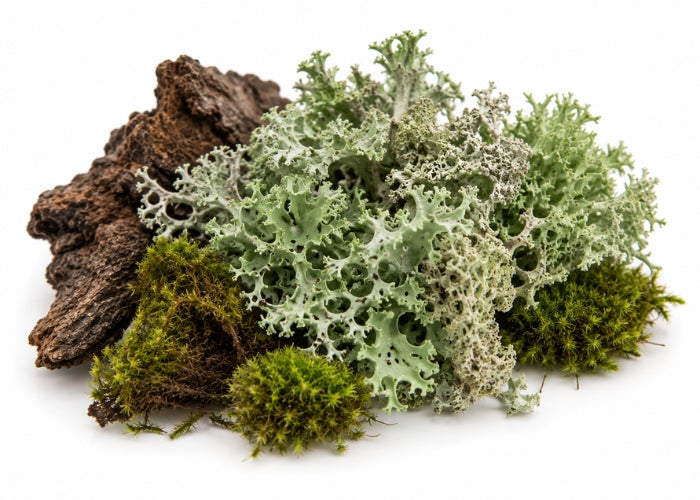
Oakmoss (Evernia prunastri) is a lichen traditionally processed as a solvent-extracted absolute rather than a steam-distilled essential oil — this is universal industry practice for oakmoss, since the lichen doesn't yield a true essential oil via distillation. The result is a dark green to brownish, highly viscous liquid with a deep, earthy, mossy aroma and leathery undertones, long prized in perfumery as a base note and fixative.
Oakmoss is best known for anchoring and extending the life of other fragrance notes in luxury perfumes, particularly in classic chypre and fougère-style accords, where it adds warmth, depth and a distinctive forest-floor character.
Beyond perfumery, Oakmoss is a popular addition to soaps, candles and natural home fragrance for its rich, grounding aroma, and pairs beautifully with both floral and woody-citrus oils in blended creations.
Due to its naturally thick, viscous consistency, Oakmoss may thicken further in cooler weather and can benefit from gentle warming (such as in a warm water bath) before it pours or blends easily.
This one deserves a little extra care: Oakmoss is a well-documented skin sensitiser, and a skin and eye irritant. Always dilute well, patch test first, and never ingest. Not recommended for use during pregnancy or while breastfeeding.
Specifications
| Specification | Detail |
|---|---|
| Botanical Name | Evernia prunastri |
| Plant Part Used | Whole Lichen |
| Extraction Method | Solvent Extraction Followed by Vacuum Distillation |
| Origin | India |
| Purity | 100% Pure, Natural and Undiluted |
| Appearance | Dark Green to Brownish, Highly Viscous Liquid |
| Refractive Index | 1.480 to 1.520 @ 20°C |
| Specific Gravity | 0.980 to 1.050 @ 25°C |
| Shelf Life | 36 Months (Cool, Dry Place Away From Direct Sunlight) |
Uses ▼
Burners and vaporizers
In vapor therapy, Oakmoss's deep, earthy aroma adds a grounding, forest-like base note to diffuser blends, best paired with brighter citrus or floral oils.
Blended massage oil or in the bath
Used well diluted, Oakmoss can add a rich, grounding note to massage blends — always patch test first given its sensitisation profile.
Blended in a cream/base cream
In soaps, creams and lotions, Oakmoss's fixative quality helps anchor other fragrance notes and adds a distinctive earthy depth, used at a low percentage.
Blends Well With
| Although essential oils blend well with one another, Oakmoss oil goes particularly well with other essential oils such as lavender, cypress, geranium, patchouli, bergamot, orange and lemon. |
Usage & Formulation Guide ▼
For soap makers, natural perfumers and cosmetic formulators. These are starting points, not finished formulas — always confirm compliance, stability and safety for your own finished product before use — see the IFRA Usage Guidelines document.
Fine Fragrance & Perfumery Accord
Oakmoss is the classic base note in chypre and fougère accords — but its IFRA limits are extremely tight (as low as 0.016% in some categories), so use it as a trace fixative rather than a headline note, and always verify against the current category limit.
Skincare & Massage Oil Inclusion Rate
Given its significant sensitisation profile and tight IFRA restriction, keep Oakmoss to well under 0.1% in any leave-on skincare formulation.
Aromatherapy & Diffuser Blend
For a grounding blend, try 1 drop Oakmoss with 3 drops Bergamot and 2 drops Lavender — a little goes a long way.
Cold-Process Soap
Oakmoss can be used at around 0.1% of total oil weight in cold-process soap for a subtle earthy depth, in line with its rinse-off category limits.

Product Documents SPECIFICATIONSSAFETY DATA SHEETIFRA GUIDELINESUSER GUIDE |
Couldn't load pickup availability
Oakmoss Essential Oil (Evernia prunastri)
Oakmoss (Evernia prunastri) is a lichen traditionally processed as a solvent-extracted absolute rather than a steam-distilled essential oil — this is universal industry practice for oakmoss, since the lichen doesn't yield a true essential oil via distillation. The result is a dark green to brownish, highly viscous liquid with a deep, earthy, mossy aroma and leathery undertones, long prized in perfumery as a base note and fixative.
Oakmoss is best known for anchoring and extending the life of other fragrance notes in luxury perfumes, particularly in classic chypre and fougère-style accords, where it adds warmth, depth and a distinctive forest-floor character.
Beyond perfumery, Oakmoss is a popular addition to soaps, candles and natural home fragrance for its rich, grounding aroma, and pairs beautifully with both floral and woody-citrus oils in blended creations.
Due to its naturally thick, viscous consistency, Oakmoss may thicken further in cooler weather and can benefit from gentle warming (such as in a warm water bath) before it pours or blends easily.
This one deserves a little extra care: Oakmoss is a well-documented skin sensitiser, and a skin and eye irritant. Always dilute well, patch test first, and never ingest. Not recommended for use during pregnancy or while breastfeeding.
Specifications
| Specification | Detail |
|---|---|
| Botanical Name | Evernia prunastri |
| Plant Part Used | Whole Lichen |
| Extraction Method | Solvent Extraction Followed by Vacuum Distillation |
| Origin | India |
| Purity | 100% Pure, Natural and Undiluted |
| Appearance | Dark Green to Brownish, Highly Viscous Liquid |
| Refractive Index | 1.480 to 1.520 @ 20°C |
| Specific Gravity | 0.980 to 1.050 @ 25°C |
| Shelf Life | 36 Months (Cool, Dry Place Away From Direct Sunlight) |
Uses ▼
Burners and vaporizers
In vapor therapy, Oakmoss's deep, earthy aroma adds a grounding, forest-like base note to diffuser blends, best paired with brighter citrus or floral oils.
Blended massage oil or in the bath
Used well diluted, Oakmoss can add a rich, grounding note to massage blends — always patch test first given its sensitisation profile.
Blended in a cream/base cream
In soaps, creams and lotions, Oakmoss's fixative quality helps anchor other fragrance notes and adds a distinctive earthy depth, used at a low percentage.
Blends Well With
| Although essential oils blend well with one another, Oakmoss oil goes particularly well with other essential oils such as lavender, cypress, geranium, patchouli, bergamot, orange and lemon. |
Usage & Formulation Guide ▼
For soap makers, natural perfumers and cosmetic formulators. These are starting points, not finished formulas — always confirm compliance, stability and safety for your own finished product before use — see the IFRA Usage Guidelines document.
Fine Fragrance & Perfumery Accord
Oakmoss is the classic base note in chypre and fougère accords — but its IFRA limits are extremely tight (as low as 0.016% in some categories), so use it as a trace fixative rather than a headline note, and always verify against the current category limit.
Skincare & Massage Oil Inclusion Rate
Given its significant sensitisation profile and tight IFRA restriction, keep Oakmoss to well under 0.1% in any leave-on skincare formulation.
Aromatherapy & Diffuser Blend
For a grounding blend, try 1 drop Oakmoss with 3 drops Bergamot and 2 drops Lavender — a little goes a long way.
Cold-Process Soap
Oakmoss can be used at around 0.1% of total oil weight in cold-process soap for a subtle earthy depth, in line with its rinse-off category limits.
|
Product Documents SPECIFICATIONSSAFETY DATA SHEETIFRA GUIDELINESUSER GUIDE |