Davana Essential Oil
Davana Essential Oil
Davana Essential Oil (Artemisia pallens)
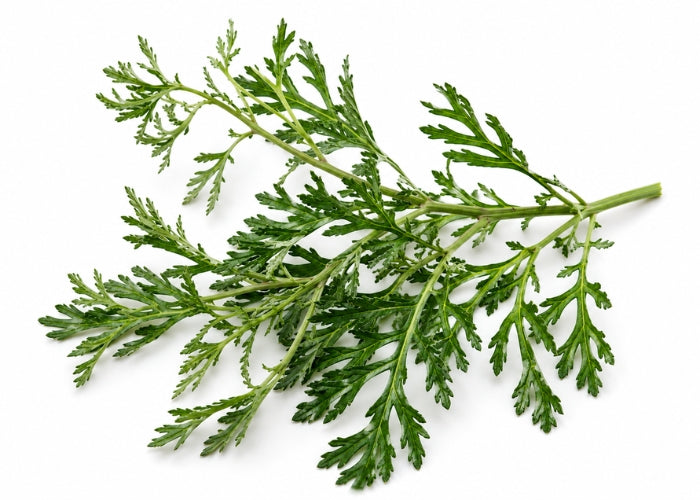
Davana (Artemisia pallens) is steam-distilled from the leaves and flowering tops of the davana plant, yielding a rare, viscous, burnt orange to dark golden-yellow liquid with a warm, green, herbaceous-balsamic aroma and sweet, fruity undertones. It's traditionally valued as a grounding middle-note oil with a long history of use in perfumery and aromatherapy, and — thanks to its unique constituent profile — should always be used in low doses.
Diffused, Davana is traditionally used to ease anxiety, stress and low mood, to calm and settle the mind, and to help clear coughs, colds and bronchial congestion. Well diluted in a massage oil or in the bath, it's traditionally reached for to support digestion and settle a nervous stomach, and to help ease menstrual discomfort and menopause symptoms.
Diluted well into a cream or lotion, Davana is traditionally used for its antiseptic, skin-soothing properties on minor irritations — always at a low concentration, given its sensitising potential.
This one deserves a little extra care: Davana Essential Oil should never be swallowed — if it is, don't induce vomiting, as there's a risk it could enter the lungs. It can also be irritating to the skin and may cause an allergic reaction in some people, so always dilute well before topical use and do a patch test first. Keep it well out of reach of children, and check with your healthcare provider before use during pregnancy or breastfeeding.
Specifications
| Specification | Detail |
|---|---|
| Botanical Name | Artemisia pallens |
| Plant Part Used | Leaves and Flowering Tops |
| Extraction Method | Steam Distillation |
| Origin | Kannauj, Uttar Pradesh, India |
| Purity | 100% Pure, Natural, and Undiluted |
| Appearance | Viscous, Burnt Orange to Dark Golden-Yellow Liquid |
| Specific Gravity | 0.940 to 0.980 @ 20°C |
| Refractive Index | 1.480 to 1.495 @ 20°C |
| Shelf Life | 3 Years (Stored in Airtight Containers in a Cool, Dark Place) |
Uses ▼
Burners and vaporizers
In a diffuser, Davana is traditionally used to ease anxiety, stress and low mood, to calm and settle the mind, and to help clear coughs, colds and bronchial congestion.
Blended massage oil or in the bath
Well diluted in a massage oil or in the bath, Davana is traditionally used to support digestion and settle a nervous stomach, and to help ease menstrual discomfort and menopause symptoms.
Blended in a cream/base cream
Diluted well into a cream or lotion, Davana is traditionally used for its antiseptic, skin-soothing properties on minor irritations — always at a low concentration, with a patch test first, given its sensitising potential.
Blends Well With
| Although essential oils blend well with one another, Davana oil goes particularly well with other essential oils such as bergamot, sweet orange, jasmine, rose, ylang ylang, sandalwood, black pepper, cardamom, vanilla and amber. |
Usage & Formulation Guide ▼
For soap makers, natural perfumers and cosmetic formulators. These are starting points, not finished formulas — always confirm compliance, stability and safety (including IFRA usage limits) for your own finished product before use.
Fine fragrance & perfumery accord
Davana is one of natural perfumery's most prized and most potent materials, famed for a fruity, wine-like, faintly tobacco-toned facet driven by davanone. Because that character is so concentrated, it's used at genuinely low levels — typically around 0.1–0.5% of the fragrance concentrate, with some perfumers going as low as 0.05% for just a whisper of effect. At these rates it reads as a diffusive heart note, lending warmth, complexity and a natural "boozy" depth to accords built around rose, jasmine, sandalwood and vanilla — the same companion notes it's prized for blending with.
Leave-on skincare inclusion rate
Davana carries a Category 1 skin-sensitisation classification, so leave-on formulations (serums, lotions, balms) call for real caution. Keep total Davana content to a small fraction of a percent of the finished product — well under 0.2% is a sensible ceiling to start from — and always carry out your own compatibility and patch testing on the specific finished formulation before wider use.
Aromatherapy & diffuser blends
Davana's intensity means a little goes a long way in a diffuser: 1–2 drops alongside 3–4 drops of a lighter companion such as bergamot, sweet orange or sandalwood, in a modest 6–8 drop total blend, is usually enough to bring through its distinctive fruity-wine character without overwhelming a room.
Cold-process soap
Davana is rarely used in cold-process soap. Its cost and potency are a poor match for a process where much of a delicate heart note is lost to saponification heat and cure time, and the amount needed to register any scent through that loss would sit well above a level appropriate for a Category 1 sensitiser. Formulators after a soap fragrance in this family are generally better served using a small amount of Davana within a blend anchored by more soap-stable base notes, rather than relying on it alone.

Product Documents SPECIFICATIONSSAFETY DATA SHEETIFRA GUIDELINESUSER GUIDE |
Couldn't load pickup availability
Davana Essential Oil (Artemisia pallens)
Davana (Artemisia pallens) is steam-distilled from the leaves and flowering tops of the davana plant, yielding a rare, viscous, burnt orange to dark golden-yellow liquid with a warm, green, herbaceous-balsamic aroma and sweet, fruity undertones. It's traditionally valued as a grounding middle-note oil with a long history of use in perfumery and aromatherapy, and — thanks to its unique constituent profile — should always be used in low doses.
Diffused, Davana is traditionally used to ease anxiety, stress and low mood, to calm and settle the mind, and to help clear coughs, colds and bronchial congestion. Well diluted in a massage oil or in the bath, it's traditionally reached for to support digestion and settle a nervous stomach, and to help ease menstrual discomfort and menopause symptoms.
Diluted well into a cream or lotion, Davana is traditionally used for its antiseptic, skin-soothing properties on minor irritations — always at a low concentration, given its sensitising potential.
This one deserves a little extra care: Davana Essential Oil should never be swallowed — if it is, don't induce vomiting, as there's a risk it could enter the lungs. It can also be irritating to the skin and may cause an allergic reaction in some people, so always dilute well before topical use and do a patch test first. Keep it well out of reach of children, and check with your healthcare provider before use during pregnancy or breastfeeding.
Specifications
| Specification | Detail |
|---|---|
| Botanical Name | Artemisia pallens |
| Plant Part Used | Leaves and Flowering Tops |
| Extraction Method | Steam Distillation |
| Origin | Kannauj, Uttar Pradesh, India |
| Purity | 100% Pure, Natural, and Undiluted |
| Appearance | Viscous, Burnt Orange to Dark Golden-Yellow Liquid |
| Specific Gravity | 0.940 to 0.980 @ 20°C |
| Refractive Index | 1.480 to 1.495 @ 20°C |
| Shelf Life | 3 Years (Stored in Airtight Containers in a Cool, Dark Place) |
Uses ▼
Burners and vaporizers
In a diffuser, Davana is traditionally used to ease anxiety, stress and low mood, to calm and settle the mind, and to help clear coughs, colds and bronchial congestion.
Blended massage oil or in the bath
Well diluted in a massage oil or in the bath, Davana is traditionally used to support digestion and settle a nervous stomach, and to help ease menstrual discomfort and menopause symptoms.
Blended in a cream/base cream
Diluted well into a cream or lotion, Davana is traditionally used for its antiseptic, skin-soothing properties on minor irritations — always at a low concentration, with a patch test first, given its sensitising potential.
Blends Well With
| Although essential oils blend well with one another, Davana oil goes particularly well with other essential oils such as bergamot, sweet orange, jasmine, rose, ylang ylang, sandalwood, black pepper, cardamom, vanilla and amber. |
Usage & Formulation Guide ▼
For soap makers, natural perfumers and cosmetic formulators. These are starting points, not finished formulas — always confirm compliance, stability and safety (including IFRA usage limits) for your own finished product before use.
Fine fragrance & perfumery accord
Davana is one of natural perfumery's most prized and most potent materials, famed for a fruity, wine-like, faintly tobacco-toned facet driven by davanone. Because that character is so concentrated, it's used at genuinely low levels — typically around 0.1–0.5% of the fragrance concentrate, with some perfumers going as low as 0.05% for just a whisper of effect. At these rates it reads as a diffusive heart note, lending warmth, complexity and a natural "boozy" depth to accords built around rose, jasmine, sandalwood and vanilla — the same companion notes it's prized for blending with.
Leave-on skincare inclusion rate
Davana carries a Category 1 skin-sensitisation classification, so leave-on formulations (serums, lotions, balms) call for real caution. Keep total Davana content to a small fraction of a percent of the finished product — well under 0.2% is a sensible ceiling to start from — and always carry out your own compatibility and patch testing on the specific finished formulation before wider use.
Aromatherapy & diffuser blends
Davana's intensity means a little goes a long way in a diffuser: 1–2 drops alongside 3–4 drops of a lighter companion such as bergamot, sweet orange or sandalwood, in a modest 6–8 drop total blend, is usually enough to bring through its distinctive fruity-wine character without overwhelming a room.
Cold-process soap
Davana is rarely used in cold-process soap. Its cost and potency are a poor match for a process where much of a delicate heart note is lost to saponification heat and cure time, and the amount needed to register any scent through that loss would sit well above a level appropriate for a Category 1 sensitiser. Formulators after a soap fragrance in this family are generally better served using a small amount of Davana within a blend anchored by more soap-stable base notes, rather than relying on it alone.
|
Product Documents SPECIFICATIONSSAFETY DATA SHEETIFRA GUIDELINESUSER GUIDE |