Coriander Essential Oil
Coriander Essential Oil
Coriander Essential Oil (Coriandrum sativum)
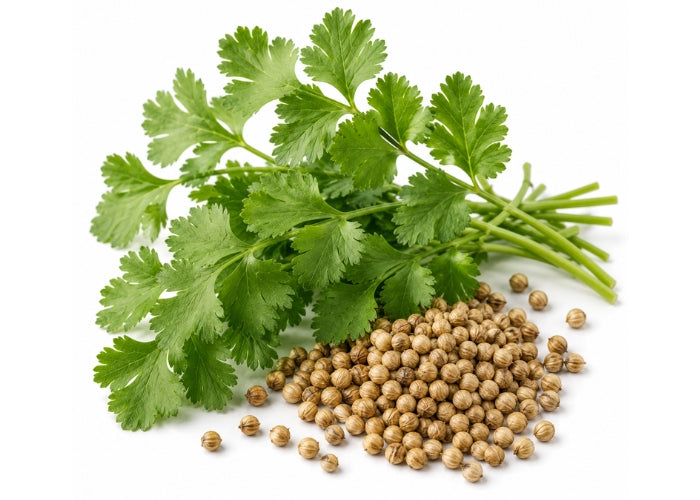
Coriander (Coriandrum sativum) is steam-distilled from the crushed, ripe seeds of the coriander plant, yielding a clear, pale yellow to colorless liquid with a warm, sweet, spicy-herbaceous aroma. It's traditionally valued as a refreshing, warming and comforting oil, with a long history of use for everyday aches and pains.
Diffused, Coriander is traditionally used to refresh and uplift the mind, easing mental fatigue, migraine, tension and nervous weakness, while helping to stimulate a flagging appetite. In a well-diluted massage blend or the bath, it's traditionally reached for to support digestion and ease wind and cramps, to bring warmth to muscular spasms, rheumatism and arthritic joint pain, and to support the body's natural detoxification.
Blended into a cream or lotion, Coriander is traditionally used for the same tension, fatigue and digestive-comfort benefits — though, like many essential oils, it should be used with care on sensitive skin. Coriander is also traditionally regarded as an aphrodisiac, valued for its warm, uplifting character in blends intended to support mood and vitality.
A little care goes a long way: like most essential oils, Coriander is potent, so always dilute it before applying to the skin and do a quick patch test first. As with all essential oils, keep it out of reach of children, and check with your healthcare provider before using during pregnancy.
Specifications
| Specification | Detail |
|---|---|
| Botanical Name | Coriandrum sativum |
| Plant Part Used | Dried Seeds |
| Extraction Method | Steam Distillation |
| Origin | France |
| Purity | 100% Pure, Natural, Undiluted |
| Appearance | Clear, Pale Yellow to Colorless Liquid |
| Specific Gravity | 0.862 to 0.878 @ 25°C |
| Refractive Index | 1.462 to 1.472 @ 20°C |
| Shelf Life | 24-36 Months (Properly Stored) |
Uses ▼
Burners and vaporizers
In a diffuser, Coriander is traditionally used to refresh and uplift the mind, to ease mental fatigue, migraine, tension and nervous weakness, and to help stimulate a flagging appetite.
Blended massage oil or in the bath
Well diluted in a massage oil or in the bath, Coriander is traditionally used to support digestion and ease wind and cramps, to help relieve rheumatism, arthritis pain and muscular spasms, and to support the body's natural detoxification.
Blended in a cream/base cream
Diluted into a cream or lotion, Coriander is traditionally used for tension, mental fatigue, migraine, muscular spasms, arthritis and rheumatism, and digestive discomfort — though it should be used with care, as it may irritate some individuals' skin.
Blends Well With
| Although essential oils blend well with one another, Coriander oil goes particularly well with other essential oils such as pine, cinnamon, petitgrain, clove bud, clary sage, sandalwood, frankincense, bergamot, cypress, jasmine, neroli and ginger. |
Usage & Formulation Guide ▼
For soap makers, natural perfumers and cosmetic formulators. These are starting points, not finished formulas — always confirm compliance, stability and safety (including IFRA usage limits) for your own finished product before use.
Fine fragrance & perfumery
Coriander seed contributes a fresh, spicy-green, faintly citrus top-to-heart note built mainly on linalool, making it a classic component of gin-botanical and oriental accords. A useful starting point is 3–5% of the fragrance concentrate, paired with bergamot or another citrus (10–15%), a touch of clove bud (1–2%) for warmth, and sandalwood or frankincense (5–10%) to carry the accord into the base.
Leave-on massage & body oil blends
For a general warming, digestive-comfort massage oil, Coriander is conventionally used at around 1–2% of the finished blend (roughly 6–12 drops per 30ml of carrier oil), often alongside ginger. Keep facial-skin applications lower (0.5% or less) and always patch test first.
Aromatherapy diffuser blend
For an uplifting, appetite-supporting atmosphere, try 3–4 drops Coriander with 2 drops bergamot or another citrus and 1 drop clove bud or frankincense.
Cold-process soap
Coriander is typically included at 1–3% of total oil weight, added at a light trace to help preserve the top note. As it's linalool-rich, and linalool can oxidise over time into compounds linked with skin sensitisation, use fresh stock and consider adding a small amount of antioxidant (such as vitamin E) to the batch — standard good practice for linalool-rich oils in leave-on and soap formulations.

Product Documents SPECIFICATIONSSAFETY DATA SHEETIFRA GUIDELINESUSER GUIDE |
Couldn't load pickup availability
Coriander Essential Oil (Coriandrum sativum)
Coriander (Coriandrum sativum) is steam-distilled from the crushed, ripe seeds of the coriander plant, yielding a clear, pale yellow to colorless liquid with a warm, sweet, spicy-herbaceous aroma. It's traditionally valued as a refreshing, warming and comforting oil, with a long history of use for everyday aches and pains.
Diffused, Coriander is traditionally used to refresh and uplift the mind, easing mental fatigue, migraine, tension and nervous weakness, while helping to stimulate a flagging appetite. In a well-diluted massage blend or the bath, it's traditionally reached for to support digestion and ease wind and cramps, to bring warmth to muscular spasms, rheumatism and arthritic joint pain, and to support the body's natural detoxification.
Blended into a cream or lotion, Coriander is traditionally used for the same tension, fatigue and digestive-comfort benefits — though, like many essential oils, it should be used with care on sensitive skin. Coriander is also traditionally regarded as an aphrodisiac, valued for its warm, uplifting character in blends intended to support mood and vitality.
A little care goes a long way: like most essential oils, Coriander is potent, so always dilute it before applying to the skin and do a quick patch test first. As with all essential oils, keep it out of reach of children, and check with your healthcare provider before using during pregnancy.
Specifications
| Specification | Detail |
|---|---|
| Botanical Name | Coriandrum sativum |
| Plant Part Used | Dried Seeds |
| Extraction Method | Steam Distillation |
| Origin | France |
| Purity | 100% Pure, Natural, Undiluted |
| Appearance | Clear, Pale Yellow to Colorless Liquid |
| Specific Gravity | 0.862 to 0.878 @ 25°C |
| Refractive Index | 1.462 to 1.472 @ 20°C |
| Shelf Life | 24-36 Months (Properly Stored) |
Uses ▼
Burners and vaporizers
In a diffuser, Coriander is traditionally used to refresh and uplift the mind, to ease mental fatigue, migraine, tension and nervous weakness, and to help stimulate a flagging appetite.
Blended massage oil or in the bath
Well diluted in a massage oil or in the bath, Coriander is traditionally used to support digestion and ease wind and cramps, to help relieve rheumatism, arthritis pain and muscular spasms, and to support the body's natural detoxification.
Blended in a cream/base cream
Diluted into a cream or lotion, Coriander is traditionally used for tension, mental fatigue, migraine, muscular spasms, arthritis and rheumatism, and digestive discomfort — though it should be used with care, as it may irritate some individuals' skin.
Blends Well With
| Although essential oils blend well with one another, Coriander oil goes particularly well with other essential oils such as pine, cinnamon, petitgrain, clove bud, clary sage, sandalwood, frankincense, bergamot, cypress, jasmine, neroli and ginger. |
Usage & Formulation Guide ▼
For soap makers, natural perfumers and cosmetic formulators. These are starting points, not finished formulas — always confirm compliance, stability and safety (including IFRA usage limits) for your own finished product before use.
Fine fragrance & perfumery
Coriander seed contributes a fresh, spicy-green, faintly citrus top-to-heart note built mainly on linalool, making it a classic component of gin-botanical and oriental accords. A useful starting point is 3–5% of the fragrance concentrate, paired with bergamot or another citrus (10–15%), a touch of clove bud (1–2%) for warmth, and sandalwood or frankincense (5–10%) to carry the accord into the base.
Leave-on massage & body oil blends
For a general warming, digestive-comfort massage oil, Coriander is conventionally used at around 1–2% of the finished blend (roughly 6–12 drops per 30ml of carrier oil), often alongside ginger. Keep facial-skin applications lower (0.5% or less) and always patch test first.
Aromatherapy diffuser blend
For an uplifting, appetite-supporting atmosphere, try 3–4 drops Coriander with 2 drops bergamot or another citrus and 1 drop clove bud or frankincense.
Cold-process soap
Coriander is typically included at 1–3% of total oil weight, added at a light trace to help preserve the top note. As it's linalool-rich, and linalool can oxidise over time into compounds linked with skin sensitisation, use fresh stock and consider adding a small amount of antioxidant (such as vitamin E) to the batch — standard good practice for linalool-rich oils in leave-on and soap formulations.
|
Product Documents SPECIFICATIONSSAFETY DATA SHEETIFRA GUIDELINESUSER GUIDE |