Chamomile (German) Essential Oil
Chamomile (German) Essential Oil
German Chamomile Essential Oil (Matricaria chamomilla)
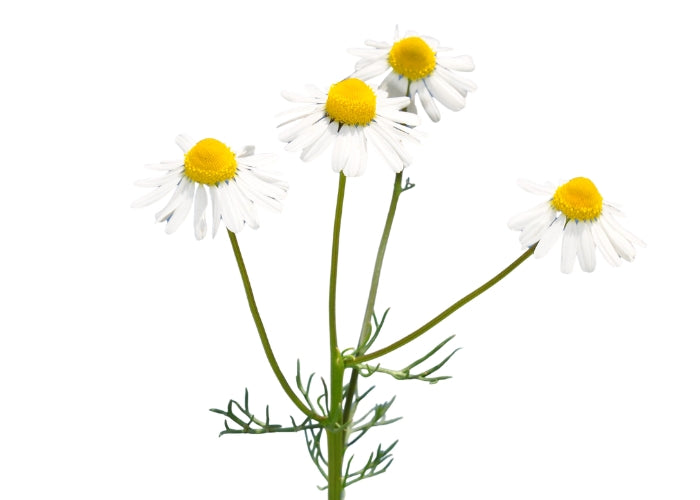
German Chamomile (Matricaria chamomilla, also known botanically as Matricaria recutita) is steam-distilled from the flowers, yielding a deep blue, viscous liquid prized for its high chamazulene and α-bisabolol content. It has a sweet, herbaceous, apple-like aroma and is one of the most researched oils for calming, skin-soothing use.
Diffused in the evening, German Chamomile's warm, herbal aroma is traditionally used to ease tension, support restful sleep and bring comfort during stressful or emotionally trying times, including menopausal discomfort. In a well-diluted massage blend, it has long been reached for to soothe the discomfort of arthritic and rheumatic joints, and to ease occasional digestive unease. In skin care, it is valued for supporting the skin's own regenerative process and calming the look of occasional itchiness, redness and irritation.
Emotionally, German Chamomile has a gentle, grounding, mothering quality — traditionally used to soothe frayed nerves, ease irritability and support a calmer state of mind, particularly at bedtime.
A little care goes a long way: German Chamomile is gentle when properly diluted, but it's still worth a patch test first — particularly if you have known sensitivities to ragweed, daisies, chrysanthemums or related plants, since it's part of the same plant family. Keep dilution to around 4% or below, avoid the eyes or any broken or irritated skin, and take a little extra care during pregnancy, breastfeeding or with young children. One more thing worth knowing: its deep blue colour can stain pale fabrics.
Specifications
| Specification | Detail |
|---|---|
| Botanical Name | Matricaria chamomilla (syn. Matricaria recutita) |
| Plant Part Used | Flowers |
| Extraction Method | Steam Distillation |
| Origin | Nepal |
| Purity | 100% Pure, Natural, Undiluted |
| Appearance | Deep Blue, Viscous Liquid |
| Specific Gravity | 0.920 to 0.960 @ 25°C |
| Refractive Index | 1.495 to 1.505 @ 20°C |
| Shelf Life | 24 Months (Properly Stored) |
Uses ▼
Burners and vaporizers
Diffused in the evening, German Chamomile's warm, herbal aroma is traditionally used to ease tension and support restful sleep, and to bring a sense of calm during stressful times or menopausal discomfort.
Blended massage oil or in the bath
Well diluted in a massage oil or in the bath, German Chamomile has long been used to soothe the discomfort of arthritic and rheumatic joints, and to ease occasional digestive unease with a gentle abdominal massage. Take care to avoid contact with mucous membranes.
Blended in base cream
Diluted into a cream or lotion (no more than 4% in a finished blend), German Chamomile is valued for supporting the skin's own regenerative process and calming the look of occasional itchiness, redness and irritation. Always patch test first, particularly if you have known sensitivities to ragweed, daisies or other Asteraceae-family plants.
Blends Well With
| Although essential oils blend well with one another, German Chamomile oil goes particularly well with other essential oils such as bergamot, clary sage, lavender, geranium, jasmine, tea tree, grapefruit, rose, lemon and ylang ylang. |
Usage & Formulation Guide ▼
For soap makers, natural perfumers and cosmetic formulators. These are starting points, not finished formulas — always confirm compliance, stability and safety (including IFRA usage limits) for your own finished product before use.
Fine fragrance & natural perfumery
German Chamomile's deep blue colour and potent, herbaceous-apple aroma mean it is used the way Blue Tansy is used — as a trace note, not a backbone. In chypre, floral and herbal-gourmand accords it is typically dosed well under 1% (many formulators sit closer to 0.1–0.3%) alongside bergamot, clary sage, lavender, geranium or rose; pushing it higher quickly reads as medicinal and can visibly tint a finished blend blue-green.
Leave-on skincare — its strongest cosmetic use
Chamazulene and α-bisabolol make this a genuine calming, anti-redness ingredient in leave-on creams, serums, post-shave balms and sensitive-skin formulations. Given its Category 1B skin-sensitiser classification and the Asteraceae cross-reactivity noted above, keep it conservative: most formulators work at around 0.5–1% of the finished leave-on product (well inside the ≤4% overall dilution ceiling already stated), always with a patch test, and it's best avoided in products aimed at infants or at people with known ragweed or daisy sensitivities.
Aromatherapy & diffuser blends
Its aroma carries, so keep German Chamomile as the minor note rather than the base of a blend — for example roughly 1 part German Chamomile to 2 parts Lavender and 3 parts Cedarwood makes a grounding evening diffuser blend.
Cold-process soap
As with Blue Tansy, chamazulene acts as a natural colourant in cold-process soap as well as a fragrance component — even a small addition can bring a batch to trace blue or blue-green, and that colour typically drifts toward olive or brown over the following weeks as the azulene oxidises. Treat it primarily as a colour effect rather than a lasting blue, and trial it in a small batch first.

Product Documents SPECIFICATIONSSAFETY DATA SHEETIFRA GUIDELINESUSER GUIDE |
Couldn't load pickup availability
German Chamomile Essential Oil (Matricaria chamomilla)
German Chamomile (Matricaria chamomilla, also known botanically as Matricaria recutita) is steam-distilled from the flowers, yielding a deep blue, viscous liquid prized for its high chamazulene and α-bisabolol content. It has a sweet, herbaceous, apple-like aroma and is one of the most researched oils for calming, skin-soothing use.
Diffused in the evening, German Chamomile's warm, herbal aroma is traditionally used to ease tension, support restful sleep and bring comfort during stressful or emotionally trying times, including menopausal discomfort. In a well-diluted massage blend, it has long been reached for to soothe the discomfort of arthritic and rheumatic joints, and to ease occasional digestive unease. In skin care, it is valued for supporting the skin's own regenerative process and calming the look of occasional itchiness, redness and irritation.
Emotionally, German Chamomile has a gentle, grounding, mothering quality — traditionally used to soothe frayed nerves, ease irritability and support a calmer state of mind, particularly at bedtime.
A little care goes a long way: German Chamomile is gentle when properly diluted, but it's still worth a patch test first — particularly if you have known sensitivities to ragweed, daisies, chrysanthemums or related plants, since it's part of the same plant family. Keep dilution to around 4% or below, avoid the eyes or any broken or irritated skin, and take a little extra care during pregnancy, breastfeeding or with young children. One more thing worth knowing: its deep blue colour can stain pale fabrics.
Specifications
| Specification | Detail |
|---|---|
| Botanical Name | Matricaria chamomilla (syn. Matricaria recutita) |
| Plant Part Used | Flowers |
| Extraction Method | Steam Distillation |
| Origin | Nepal |
| Purity | 100% Pure, Natural, Undiluted |
| Appearance | Deep Blue, Viscous Liquid |
| Specific Gravity | 0.920 to 0.960 @ 25°C |
| Refractive Index | 1.495 to 1.505 @ 20°C |
| Shelf Life | 24 Months (Properly Stored) |
Uses ▼
Burners and vaporizers
Diffused in the evening, German Chamomile's warm, herbal aroma is traditionally used to ease tension and support restful sleep, and to bring a sense of calm during stressful times or menopausal discomfort.
Blended massage oil or in the bath
Well diluted in a massage oil or in the bath, German Chamomile has long been used to soothe the discomfort of arthritic and rheumatic joints, and to ease occasional digestive unease with a gentle abdominal massage. Take care to avoid contact with mucous membranes.
Blended in base cream
Diluted into a cream or lotion (no more than 4% in a finished blend), German Chamomile is valued for supporting the skin's own regenerative process and calming the look of occasional itchiness, redness and irritation. Always patch test first, particularly if you have known sensitivities to ragweed, daisies or other Asteraceae-family plants.
Blends Well With
| Although essential oils blend well with one another, German Chamomile oil goes particularly well with other essential oils such as bergamot, clary sage, lavender, geranium, jasmine, tea tree, grapefruit, rose, lemon and ylang ylang. |
Usage & Formulation Guide ▼
For soap makers, natural perfumers and cosmetic formulators. These are starting points, not finished formulas — always confirm compliance, stability and safety (including IFRA usage limits) for your own finished product before use.
Fine fragrance & natural perfumery
German Chamomile's deep blue colour and potent, herbaceous-apple aroma mean it is used the way Blue Tansy is used — as a trace note, not a backbone. In chypre, floral and herbal-gourmand accords it is typically dosed well under 1% (many formulators sit closer to 0.1–0.3%) alongside bergamot, clary sage, lavender, geranium or rose; pushing it higher quickly reads as medicinal and can visibly tint a finished blend blue-green.
Leave-on skincare — its strongest cosmetic use
Chamazulene and α-bisabolol make this a genuine calming, anti-redness ingredient in leave-on creams, serums, post-shave balms and sensitive-skin formulations. Given its Category 1B skin-sensitiser classification and the Asteraceae cross-reactivity noted above, keep it conservative: most formulators work at around 0.5–1% of the finished leave-on product (well inside the ≤4% overall dilution ceiling already stated), always with a patch test, and it's best avoided in products aimed at infants or at people with known ragweed or daisy sensitivities.
Aromatherapy & diffuser blends
Its aroma carries, so keep German Chamomile as the minor note rather than the base of a blend — for example roughly 1 part German Chamomile to 2 parts Lavender and 3 parts Cedarwood makes a grounding evening diffuser blend.
Cold-process soap
As with Blue Tansy, chamazulene acts as a natural colourant in cold-process soap as well as a fragrance component — even a small addition can bring a batch to trace blue or blue-green, and that colour typically drifts toward olive or brown over the following weeks as the azulene oxidises. Treat it primarily as a colour effect rather than a lasting blue, and trial it in a small batch first.
|
Product Documents SPECIFICATIONSSAFETY DATA SHEETIFRA GUIDELINESUSER GUIDE |