Aniseed Essential Oil
Aniseed Essential Oil
Aniseed Essential Oil (Pimpinella anisum)
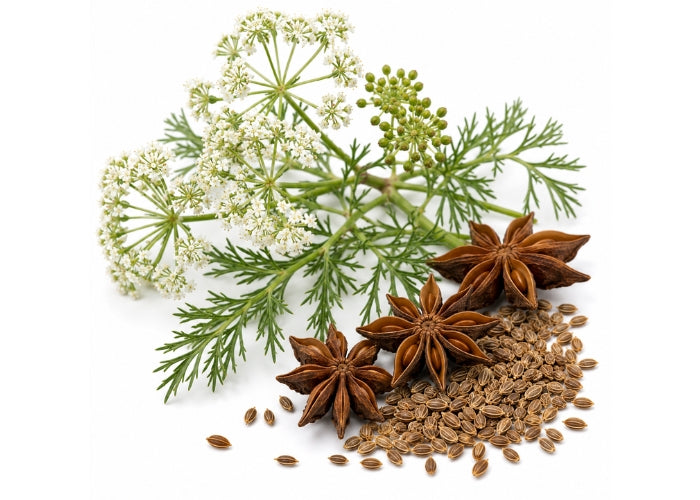
Aniseed (Pimpinella anisum) is steam-distilled from the plant's dried seeds, producing a clear oil with a warm, sweet, liquorice-like aroma that has long been valued in both traditional medicine and flavouring.
It's traditionally used for respiratory support — easing bronchitis, coughs, colds and flu by helping to loosen and expel phlegm — and makes a useful addition to a vaporiser blend for congestion and breathing difficulties.
As a digestive aid, aniseed oil is well suited to easing flatulence, indigestion, gastric cramps and nausea, and is traditionally regarded as a tonic for the circulatory and digestive systems.
Its antispasmodic properties also make it useful for muscular aches, stiffness and rheumatism, while in low dilution it can help calm tense nerves and ease menstrual discomfort. Aniseed is a more potent oil than most — always dilute well before use, and avoid during pregnancy, while breastfeeding, or with young children.
Specifications
| Specification | Detail |
|---|---|
| Botanical Name | Pimpinella anisum |
| Plant Part Used | Dried Fruits (Seeds) |
| Extraction Method | Steam Distillation |
| Origin | Kannauj, Uttar Pradesh, India |
| Purity | 100% Pure, Natural, Undiluted |
| Appearance | Clear, Colorless to Pale Yellow Liquid |
| Specific Gravity | 0.980 – 0.990 @ 25°C |
| Refractive Index | 1.552 – 1.559 @ 20°C |
| Shelf Life | 36 Months (Properly Stored) |
Uses ▼
Burners and vaporizers
In vapor therapy, aniseed oil is useful for asthma, colds and other breathing difficulties, helping to loosen and expel phlegm, as well as settling nausea.
Blended massage oil or in the bath
Diluted in a carrier oil or added to the bath, aniseed oil can ease muscular aches, stiffness and rheumatism, while its antispasmodic action helps relieve flatulence, indigestion and cramping. It also has a calming effect on tense nerves and menstrual discomfort.
Blended in a cream
Well diluted in a cream or balm, aniseed oil can be applied locally to help ease muscular aches, stiffness and rheumatic discomfort. As a more potent oil, always patch test first and keep to a low concentration.
Blends Well With
| Although essential oils blend well with one another, aniseed oil goes particularly well with other essential oils such as cardamom, caraway, cedarwood, coriander, dill, fennel, mandarin, petitgrain and rosewood. |
Usage & Formulation Guide ▼
For soap makers, natural perfumers and cosmetic formulators. These are starting points, not finished formulas — always confirm compliance, stability and safety (including IFRA usage limits) for your own finished product before use.
Diffuser blend for relaxation
Combine 3 drops Aniseed with 2 drops Lavender and 1 drop Sweet Orange.
Massage oil for digestive support
Dilute to a 1% concentration (roughly 5–6 drops per 30ml) in sweet almond or jojoba oil, and apply with a gentle clockwise abdominal massage.
Facial toner
Incorporate at 0.1% into a formulation with rose water and witch hazel for a refreshing, potentially antiseptic effect.
Soap making — aniseed & fennel swirl
Add Aniseed at 2% of total soaping oils, combined with Fennel Seed, for a classic liquorice aroma. Note that anise-family oils can sometimes accelerate trace during cold process soap making.

Product Documents SPECIFICATIONS SAFETY DATA SHEET IFRA GUIDELINES USER GUIDE |
Couldn't load pickup availability
Aniseed Essential Oil (Pimpinella anisum)
Aniseed (Pimpinella anisum) is steam-distilled from the plant's dried seeds, producing a clear oil with a warm, sweet, liquorice-like aroma that has long been valued in both traditional medicine and flavouring.
It's traditionally used for respiratory support — easing bronchitis, coughs, colds and flu by helping to loosen and expel phlegm — and makes a useful addition to a vaporiser blend for congestion and breathing difficulties.
As a digestive aid, aniseed oil is well suited to easing flatulence, indigestion, gastric cramps and nausea, and is traditionally regarded as a tonic for the circulatory and digestive systems.
Its antispasmodic properties also make it useful for muscular aches, stiffness and rheumatism, while in low dilution it can help calm tense nerves and ease menstrual discomfort. Aniseed is a more potent oil than most — always dilute well before use, and avoid during pregnancy, while breastfeeding, or with young children.
Specifications
| Specification | Detail |
|---|---|
| Botanical Name | Pimpinella anisum |
| Plant Part Used | Dried Fruits (Seeds) |
| Extraction Method | Steam Distillation |
| Origin | Kannauj, Uttar Pradesh, India |
| Purity | 100% Pure, Natural, Undiluted |
| Appearance | Clear, Colorless to Pale Yellow Liquid |
| Specific Gravity | 0.980 – 0.990 @ 25°C |
| Refractive Index | 1.552 – 1.559 @ 20°C |
| Shelf Life | 36 Months (Properly Stored) |
Uses ▼
Burners and vaporizers
In vapor therapy, aniseed oil is useful for asthma, colds and other breathing difficulties, helping to loosen and expel phlegm, as well as settling nausea.
Blended massage oil or in the bath
Diluted in a carrier oil or added to the bath, aniseed oil can ease muscular aches, stiffness and rheumatism, while its antispasmodic action helps relieve flatulence, indigestion and cramping. It also has a calming effect on tense nerves and menstrual discomfort.
Blended in a cream
Well diluted in a cream or balm, aniseed oil can be applied locally to help ease muscular aches, stiffness and rheumatic discomfort. As a more potent oil, always patch test first and keep to a low concentration.
Blends Well With
| Although essential oils blend well with one another, aniseed oil goes particularly well with other essential oils such as cardamom, caraway, cedarwood, coriander, dill, fennel, mandarin, petitgrain and rosewood. |
Usage & Formulation Guide ▼
For soap makers, natural perfumers and cosmetic formulators. These are starting points, not finished formulas — always confirm compliance, stability and safety (including IFRA usage limits) for your own finished product before use.
Diffuser blend for relaxation
Combine 3 drops Aniseed with 2 drops Lavender and 1 drop Sweet Orange.
Massage oil for digestive support
Dilute to a 1% concentration (roughly 5–6 drops per 30ml) in sweet almond or jojoba oil, and apply with a gentle clockwise abdominal massage.
Facial toner
Incorporate at 0.1% into a formulation with rose water and witch hazel for a refreshing, potentially antiseptic effect.
Soap making — aniseed & fennel swirl
Add Aniseed at 2% of total soaping oils, combined with Fennel Seed, for a classic liquorice aroma. Note that anise-family oils can sometimes accelerate trace during cold process soap making.
|
Product Documents SPECIFICATIONS SAFETY DATA SHEET IFRA GUIDELINES USER GUIDE |